Hairstyles that hide a thinning crown work best when they create strategic lift, movement, and coverage without removing unnecessary density. Shorter lengths, carefully positioned layers, textured finishes, and adjusted parting can help redistribute strands across the crown. Instead of relying on excessive teasing, the goal is creating a balanced shape that naturally appears fuller from different angles.
Hair texture and density should always guide the haircut. Fine straight strands often benefit from strong perimeters and restrained layering, while waves and curls can provide natural dimension. Pixies, bobs, bixies, and medium-length styles all offer useful possibilities when their crown sections are designed specifically to maintain movement and coverage.
Why Strategic Crown Styling Continues to Work
Crown-focused hairstyles remain useful because the right shape can redirect existing hair toward areas where greater coverage is desired. Slightly shorter upper layers encourage lift, while side parts and textured finishes prevent strands from repeatedly separating along one visible line.
These techniques are also adaptable as hair density changes. A longer pixie can become shorter, while bobs can incorporate subtle graduation or different parting patterns. Working with natural growth direction usually creates a softer result than forcing the hair into highly structured shapes requiring constant maintenance.
Textured Pixie With Longer Crown
A textured pixie with extra crown length provides flexible coverage while keeping the sides and nape relatively compact. Longer upper sections can move across the crown in different directions, helping prevent hair from separating repeatedly along the same visible areas.

Apply lightweight volumizing mousse near the roots and arrange selected sections with your fingertips rather than creating stiff spikes. A slightly irregular finish can make the distribution appear more natural. This practical short haircut works particularly well when you want manageable length while preserving enough hair through the top for adaptable styling and strategic crown coverage.
Softly Stacked Bob
A softly stacked bob uses restrained graduation through the back to create gentle elevation near the crown. Shorter supporting sections underneath can encourage the upper hair to sit with more lift, while longer surface pieces provide smooth coverage and maintain a polished silhouette.

Keep the stacking subtle because excessive layering can reduce valuable density. Blow-dry the crown with gentle root elevation and avoid flattening the upper sections with heavy products. This structured haircut is especially useful when you prefer a classic bob but need additional movement through the back without sacrificing substantial-looking sides and ends.
Side-Parted Layered Bob
A side-parted layered bob shifts hair away from its usual distribution, creating immediate movement and additional coverage across the crown. Soft internal layers provide enough lift to prevent the upper sections from lying completely flat while preserving a strong perimeter around the lower haircut.
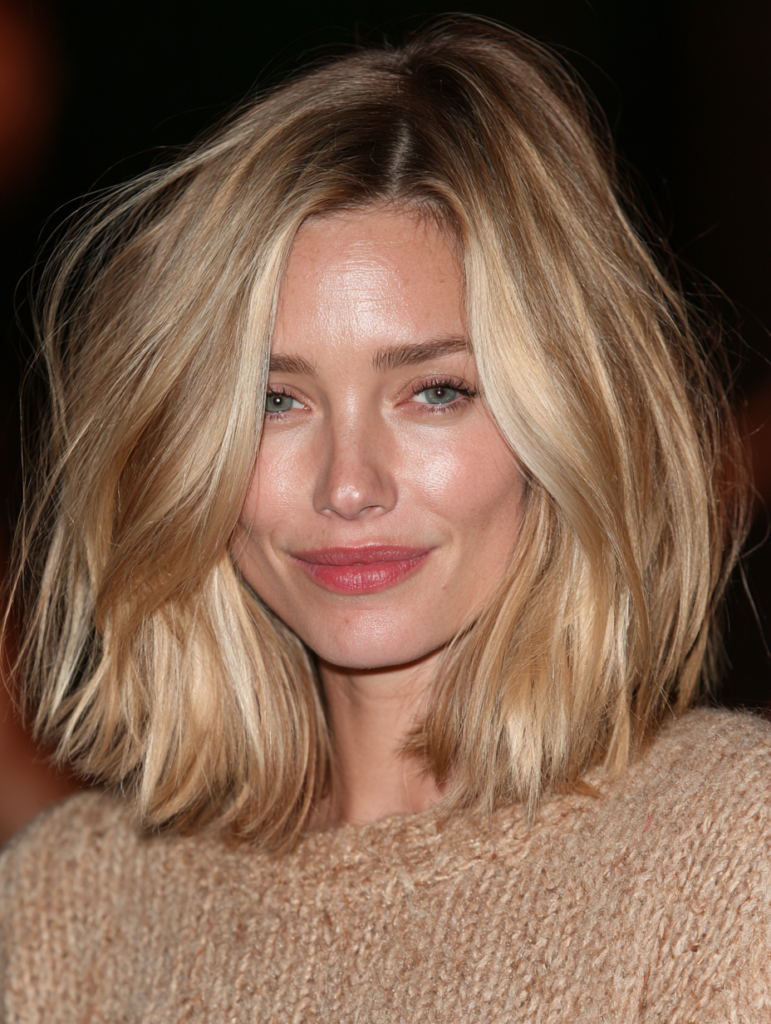
Establish the part while the hair remains damp and direct the heavier section diagonally across the crown. Lightweight root spray can reinforce the elevation without creating stiffness. This versatile bob works particularly well when you want subtle crown coverage while maintaining familiar short-to-medium proportions and a polished everyday appearance.
Tousled Bixie
A tousled bixie combines short pixie proportions with longer sections through the crown, fringe, and sides. The varied lengths create natural movement that can help disguise visible scalp areas by preventing strands from falling into one flat, predictable pattern.

Work lightweight mousse through damp hair and arrange the crown using your fingers, directing sections forward, sideways, or diagonally as needed. Avoid separating every piece too distinctly. This flexible hybrid is ideal when you want short-hair convenience while maintaining enough upper length for coverage, movement, and several different styling directions.
Rounded Bob With Crown Volume
A rounded bob creates balanced fullness through the back and sides while subtle shaping encourages gentle crown lift. The curved silhouette distributes volume more evenly around the head, which can make thinner upper sections less noticeable than hairstyles that remain completely flat.
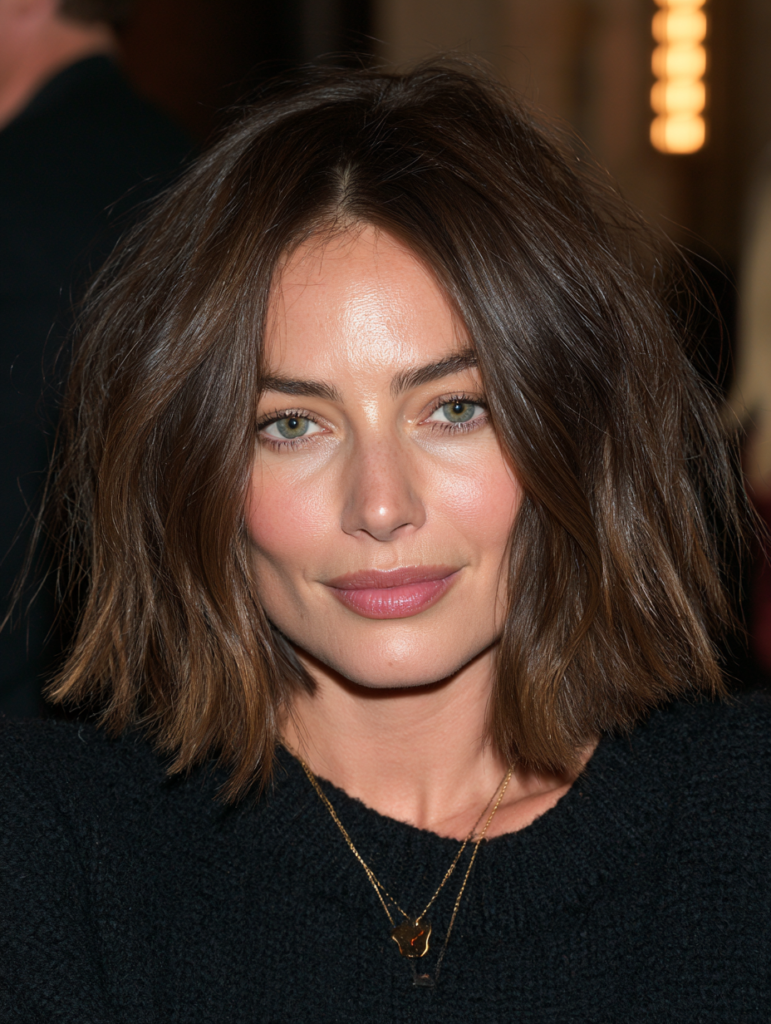
Use a small round brush to elevate the roots while keeping the surface smooth and flexible. Avoid creating excessive height because softer volume generally looks more natural. This polished haircut works particularly well when you prefer classic styling and want the crown to blend seamlessly into a fuller overall silhouette.
Short Shag With Crown Layers
A short shag uses carefully positioned crown layers to create movement and prevent the upper hair from lying flat against the scalp. Slight variations in length can redirect strands across thinner areas while textured sides keep the overall hairstyle balanced and intentionally relaxed.

Keep the layering controlled so valuable density is not unnecessarily removed from already delicate sections. Lightweight texture foam can encourage natural separation without exposing too much scalp. This contemporary haircut is particularly suitable when you prefer casual movement and want crown coverage that does not depend on perfectly smooth or heavily structured styling.
Long Pixie With Side-Swept Fringe
A long pixie preserves additional length through the crown and front, allowing strands to sweep diagonally across areas where more coverage is desired. Shorter sides reduce overall weight, making it easier for the upper sections to maintain gentle lift throughout the day.
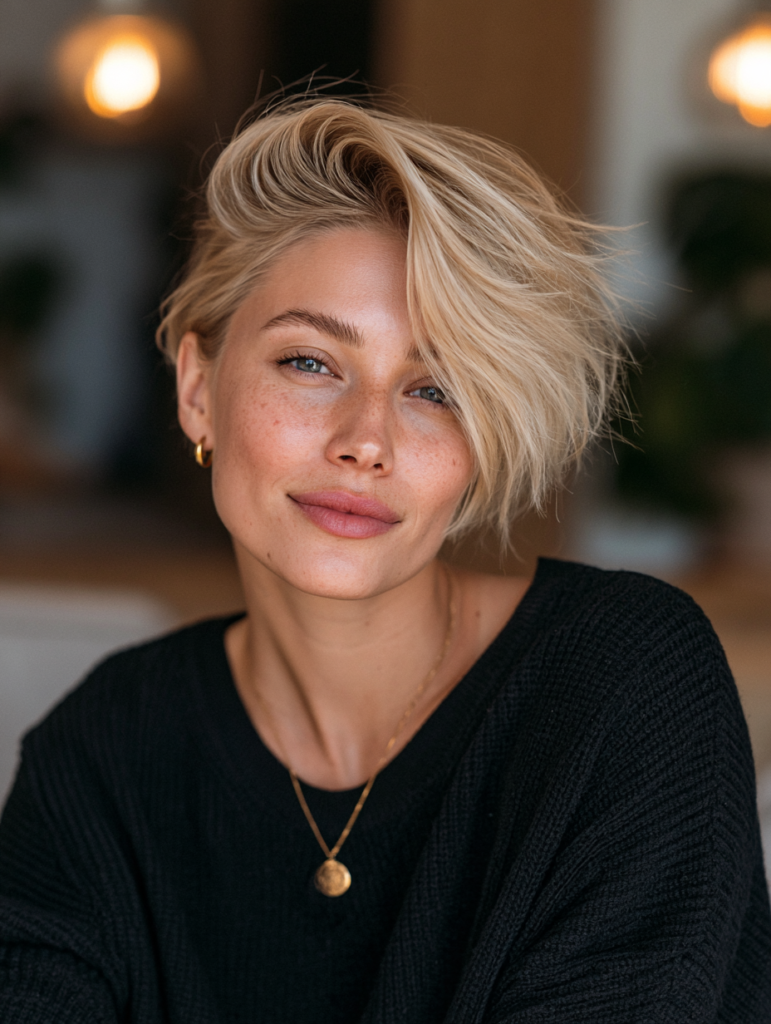
Use lightweight root mousse and guide the crown sideways rather than flattening it directly backward. The longer fringe can connect naturally with these upper sections for continuous movement. This adaptable haircut works beautifully when you want a short silhouette but need enough top length to experiment with different parts and coverage patterns.
Wavy Bob With Off-Center Part
A wavy bob combines dimensional texture with an off-center part that prevents the crown from appearing overly symmetrical or flat. Broad bends change the direction of individual strands, creating visual fullness while helping disguise areas where density varies across the top.

Apply lightweight wave foam and encourage natural bends without separating them into numerous small sections. Shift the part occasionally to maintain root lift and prevent repeated flattening. This versatile hairstyle works especially well when your hair naturally waves or responds easily to gentle styling, providing crown movement without requiring extensive layering.
Feathered Pixie Bob
A feathered pixie bob uses softly directed layers through the crown and sides to create airy movement without sacrificing all the density of a longer short haircut. Feathered sections can overlap naturally, helping provide coverage while keeping the overall silhouette light and flexible.
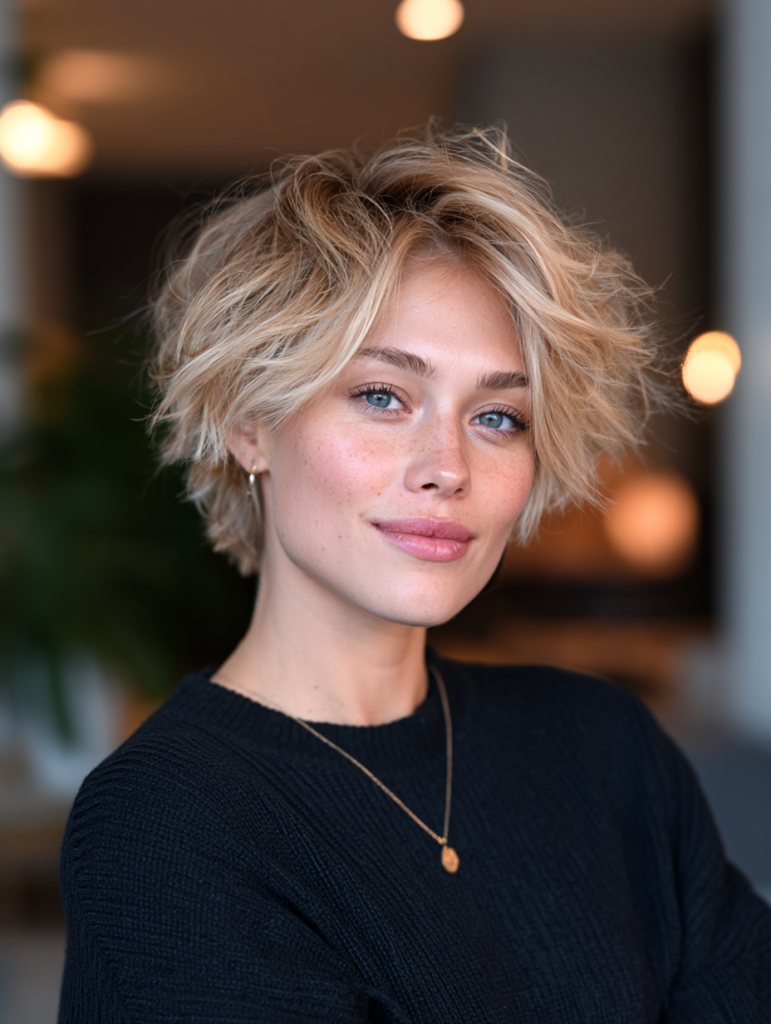
Direct the upper pieces sideways or slightly forward using your fingertips and a small amount of volumizing mousse. Avoid aggressive thinning through the crown. This graceful hybrid works particularly well when you prefer soft short hairstyles and want enough overlapping length to create natural-looking fullness around thinner areas.
Blunt Bob With Deep Side Part
A blunt bob preserves maximum density through the ends while a deep side part redistributes hair across the crown. Moving more strands toward one side can provide additional coverage, while the strong lower perimeter creates visual fullness throughout the overall hairstyle.
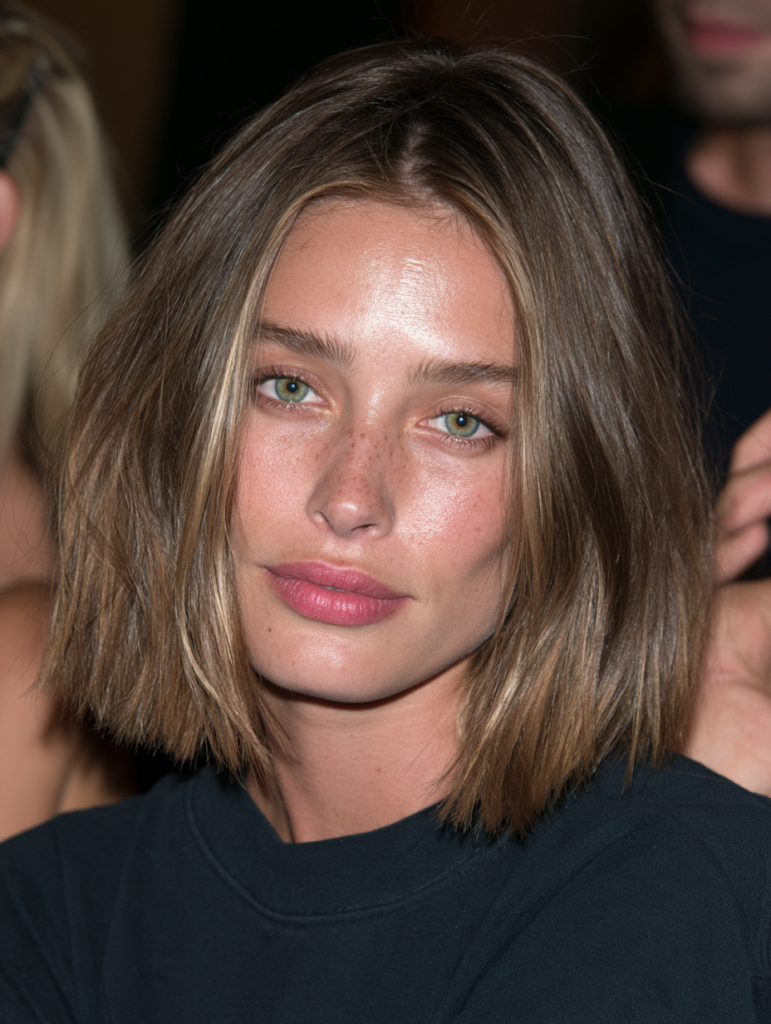
Arrange the part while the hair remains damp and lift the roots gently before directing the heavier section across the top. Keep layering minimal so density remains concentrated within the main shape. This straightforward option works particularly well when thinning is accompanied by fine ends that also benefit from a stronger, fuller-looking baseline.
Layered Crop With Swept Crown
A layered crop keeps the neckline and sides compact while preserving strategically longer sections across the crown. These upper pieces can be directed diagonally, forward, or slightly sideways, providing flexibility when certain areas require additional visual coverage.
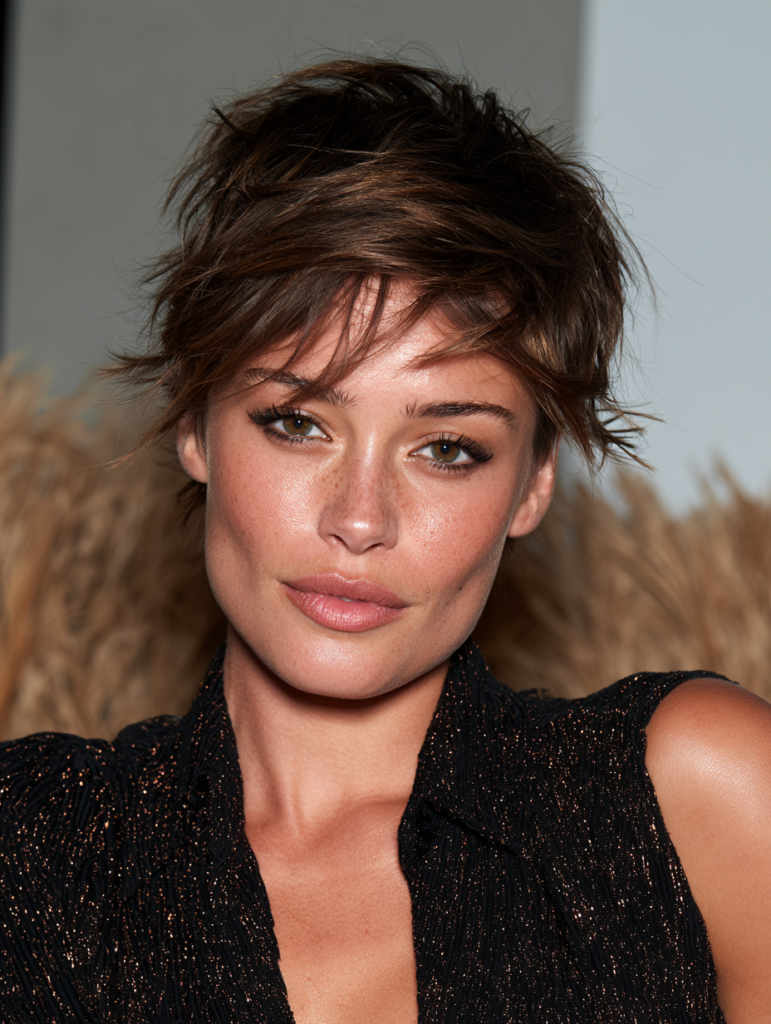
Use lightweight styling foam and arrange the hair according to its natural growth pattern rather than forcing dramatic height. Keep the surface softly separated for believable movement. This practical short hairstyle works particularly well when you want an uncomplicated daily routine but still need enough length through the crown to adjust coverage as required.
Shoulder-Length Cut With Soft Crown Layers
A shoulder-length haircut can provide crown movement when upper layers are kept subtle and carefully positioned. Slightly shorter sections near the top reduce weight and encourage lift, while longer lower lengths preserve density and maintain styling flexibility for ponytails or simple updos.

Use a lightweight root spray and gently elevate the crown during drying without overworking the ends. Broad waves can add additional dimension throughout the hairstyle. This option is ideal when you prefer medium-length hair and want more crown fullness without transitioning immediately into a short bob or pixie.
Curly Crop With Full Crown
A curly crop can create natural crown fullness by preserving enough upper length for curls to form and overlap. The dimensional pattern changes direction across the scalp, helping break up visible areas while shorter sides maintain a balanced and manageable overall silhouette.
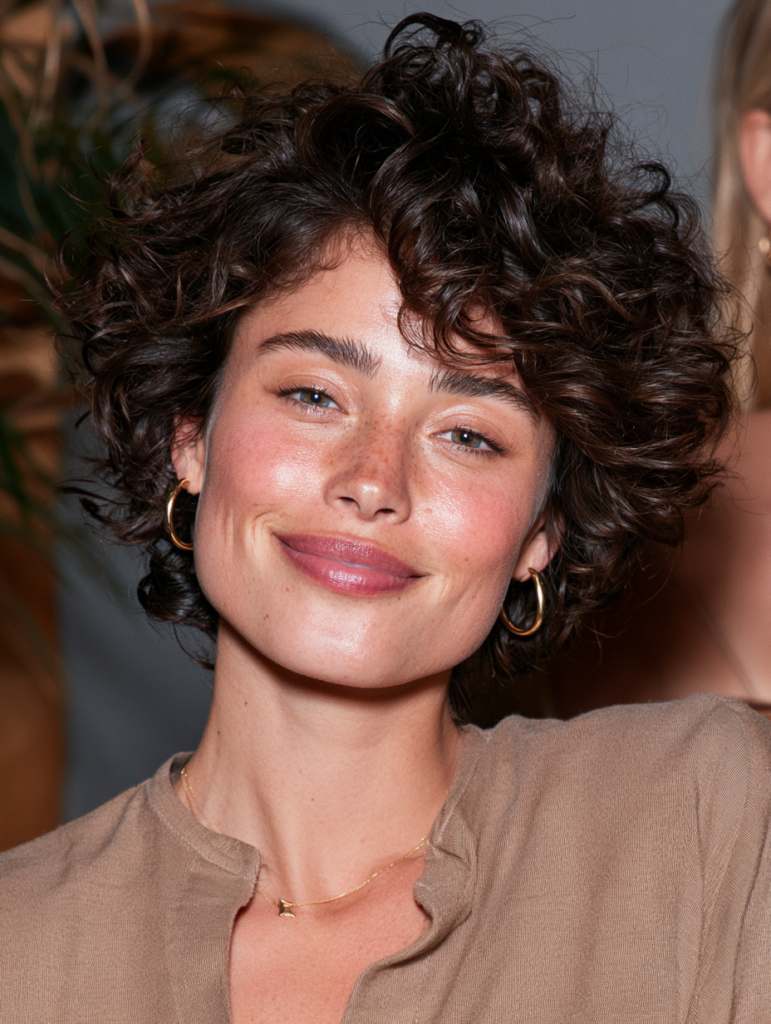
Apply lightweight curl cream to damp hair and encourage curl groupings with your fingers rather than brushing them apart. Avoid removing excessive weight from the crown during cutting. This expressive hairstyle works particularly well when naturally curly hair already provides movement and you want to use that texture strategically for fuller-looking coverage.
A Crown-Focused Styling Routine for Fuller Coverage
Hairstyles that hide a thinning crown generally benefit from lightweight root support and flexible movement rather than heavy styling. Apply volumizing mousse or root spray sparingly near the upper sections, then dry the crown while gently lifting strands away from the scalp. Directing hair diagonally instead of straight backward can improve coverage.
Part placement can make a noticeable difference as well. Experiment with slightly shifting your usual part rather than repeatedly separating hair along the same line. Avoid excessive oils, thick creams, and aggressive teasing around delicate crown strands. If thinning is new, rapidly progressing, or creating distinct patches, consider discussing it with a dermatologist or qualified healthcare professional.
Final Thoughts
Hairstyles that hide a thinning crown rely on intelligent distribution of existing hair rather than simply creating maximum volume. Longer pixie crowns offer adjustable coverage, stacked bobs create gentle elevation, and textured bixies introduce multidirectional movement. Waves and curls can provide additional dimension when their natural patterns are preserved.
The strongest option should complement your density and natural growth direction while remaining comfortable to maintain. Strategic parting, controlled layering, and lightweight styling can make the crown appear fuller without sacrificing valuable hair elsewhere. Whether you prefer a short crop, classic bob, or shoulder-length style, thoughtful shaping can provide softer, more natural-looking coverage.
