The best bangs for women over 60 can refresh a hairstyle by introducing softness, movement, and definition around the face. From airy wisps to longer curtain fringe, bangs can complement pixies, bobs, lobs, curls, and layered hairstyles. The key is choosing a shape that works naturally with your hair’s density, texture, and growth pattern.
There is no need to limit yourself to one traditional fringe style. Fine hair can benefit from lightweight bangs, while thicker strands can support fuller shapes. Curly and wavy textures offer their own distinctive movement. These 13 options provide versatile ways to incorporate bangs while keeping everyday styling practical, flattering, and easy to personalize.
Why Beautifully Framed Bangs Continue to Endure
Bangs remain popular because they can noticeably change a hairstyle without requiring a dramatic reduction in overall length. Small adjustments to density, direction, and fringe length can transform a familiar haircut while preserving the styling routine you already enjoy.
For women over 60, versatility makes bangs especially useful. Longer fringes can tuck behind the ears, curtain bangs gradually become face-framing layers, and wispy sections require less density than traditional full bangs. With thoughtful shaping, fringe can evolve naturally between trims instead of demanding constant precision.
Wispy Side-Swept Bangs
Wispy side-swept bangs create delicate diagonal movement across the forehead without requiring a heavy fringe section. Their lightweight shape works particularly well when you want subtle framing that blends naturally into the sides of a bob, pixie, or medium-length haircut.

Keep the bangs slightly longer toward the temple so they transition smoothly into surrounding hair. Arrange the direction while strands remain damp and use minimal styling product to preserve softness. This versatile fringe gives women over 60 an easy way to introduce movement while maintaining a light, flexible, and comfortably manageable everyday hairstyle.
Long Curtain Bangs
Long curtain bangs open softly through the center before extending toward the cheekbones, creating graceful framing without covering the entire forehead. Their longer proportions make them especially adaptable because they can blend into surrounding layers or tuck away whenever you prefer a more open style.
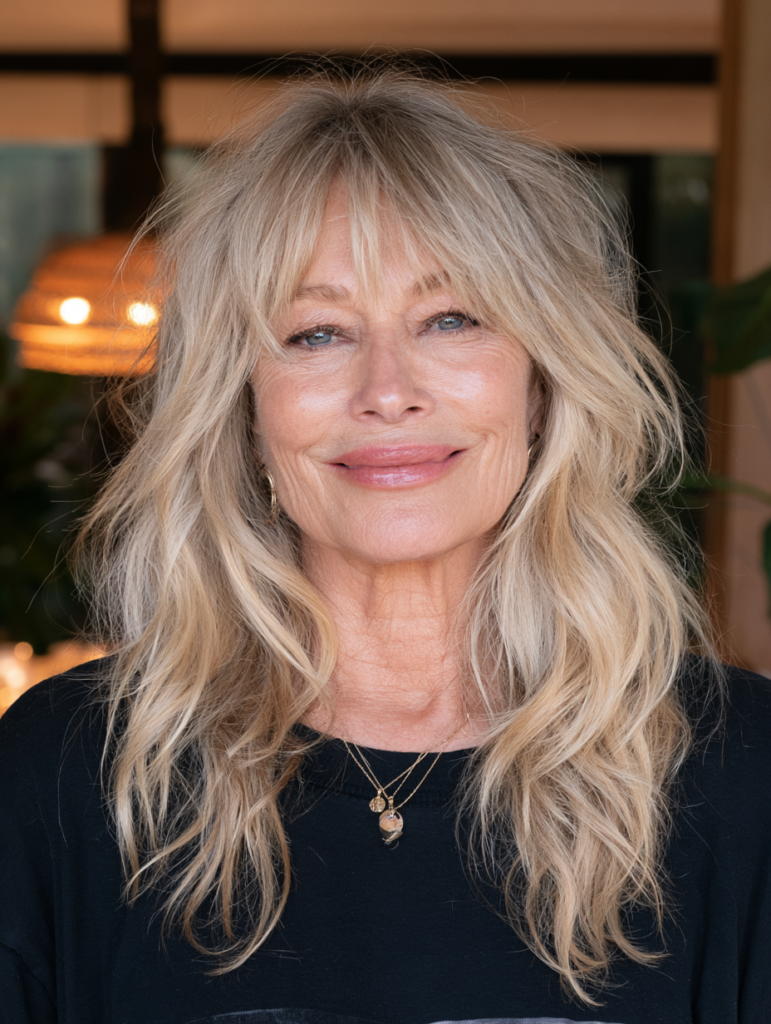
Direct each side outward while the fringe remains damp, keeping the center slightly separated rather than rigidly divided. Lightweight mousse can provide subtle support without stiffness. This flattering option works beautifully for women over 60 who want noticeable movement while maintaining enough length for flexible styling and easier grow-out.
Feathered Bangs
Feathered bangs create airy movement through softly tapered ends that blend naturally into layered hairstyles. Instead of forming a dense horizontal line, the fringe separates into light sections that provide facial framing while maintaining a relaxed, flowing appearance.
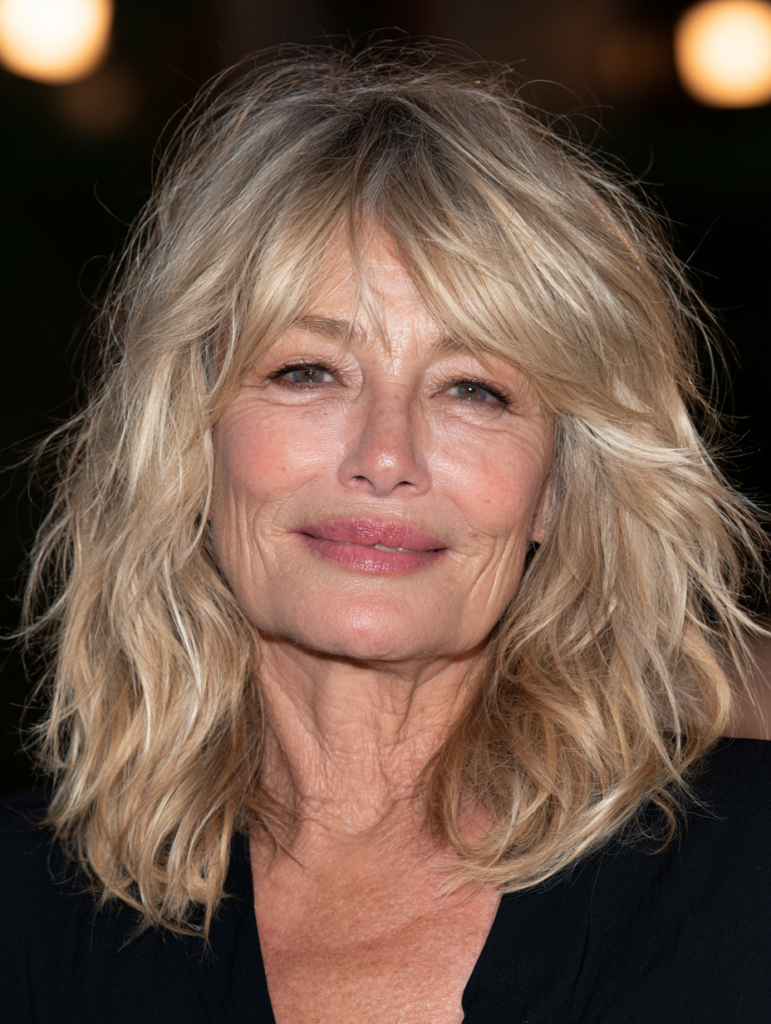
Keep the feathering controlled so the bangs retain enough substance through the center and sides. Use a small round brush or your fingertips to direct selected pieces gently away from the face. This timeless fringe suits women over 60 who appreciate softness and want bangs that complement pixies, bobs, shags, or shoulder-length layered hair.
Soft Curtain Bangs With Bob
Soft curtain bangs can transform a classic bob by adding gentle movement around the forehead while preserving the haircut’s strong underlying structure. Longer outer pieces connect naturally with the bob’s sides, preventing the fringe from appearing disconnected from the overall silhouette.

Keep the center relatively light and allow the bangs to open naturally rather than forcing a perfectly symmetrical split. The remaining bob can stay smooth or carry subtle waves. This sophisticated combination works especially well for women over 60 who want to update a familiar short haircut without introducing complicated layers or demanding styling techniques.
Curly Bangs
Curly bangs allow natural texture to create lively movement around the forehead while complementing curls throughout the remaining hairstyle. Keeping sufficient length is essential because curl shrinkage can make the finished fringe appear considerably shorter once the hair has dried completely.

Apply lightweight curl cream while strands remain damp and finger-shape individual sections before allowing them to set naturally. Avoid repeatedly stretching or brushing the fringe during drying. This expressive option is ideal for women over 60 who want to celebrate natural curls and incorporate bangs without depending on regular straightening or intensive heat styling.
Bottleneck Bangs
Bottleneck bangs begin narrower near the center before widening gradually toward the cheekbones, creating a curved framing effect. Their longer outer pieces blend smoothly into surrounding layers, providing more structure than wispy fringe while remaining softer than traditional straight-across bangs.

Shape the center lightly and encourage the sides to sweep outward for a seamless transition. Keeping the fringe flexible allows it to move naturally throughout the day. This contemporary style works beautifully for women over 60 who want noticeable bangs with enough length to adapt easily as the fringe grows between trims.
Side-Swept Bangs With Pixie
Side-swept bangs soften a pixie by preserving extra length through the front while maintaining shorter, manageable proportions around the sides and nape. The diagonal direction adds movement and can create a graceful contrast with the clean structure of the underlying haircut.
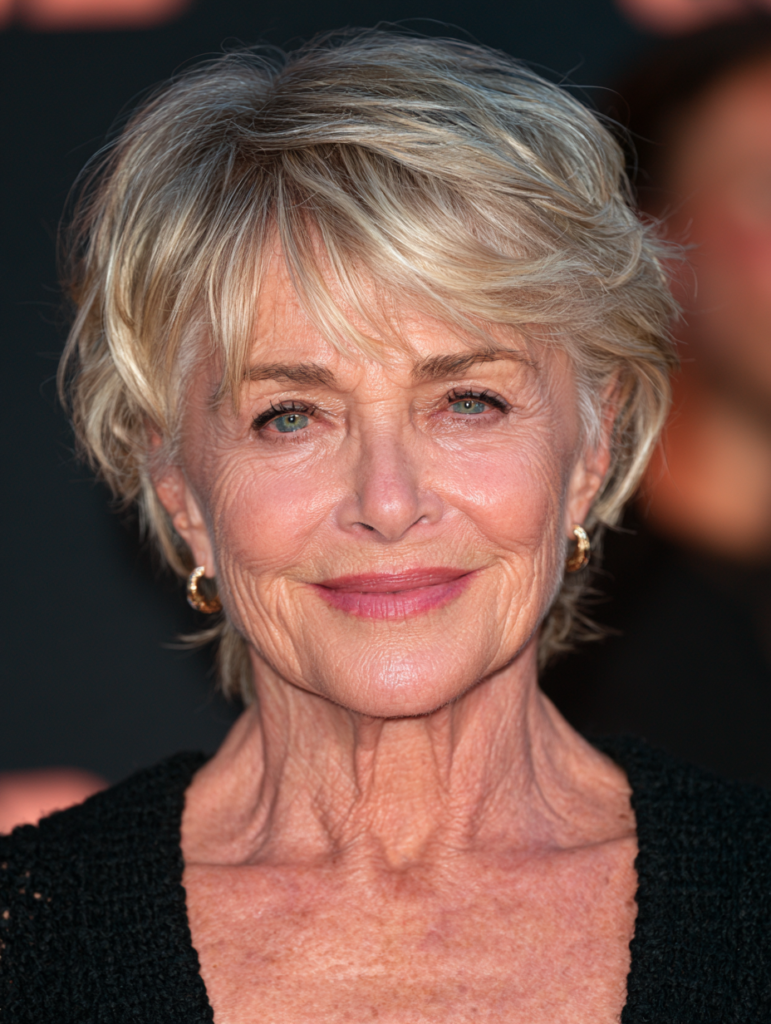
Apply lightweight styling foam and guide the fringe toward one temple using your fingers. Keep the crown softly lifted so the bangs remain integrated with the overall shape. This adaptable combination gives women over 60 short-hair convenience while retaining enough front length to experiment with smooth, feathered, or lightly textured finishes.
Wispy Bangs With Fine Hair
Wispy bangs can complement fine hair because their intentionally lightweight appearance does not depend on creating a thick fringe. Using a restrained section preserves valuable density throughout the crown while still introducing noticeable softness and definition around the forehead.

Keep individual pieces slightly separated and avoid excessive thinning, which can make delicate strands appear unnecessarily sparse. Lightweight volumizing mist can provide gentle support without flattening the roots. This subtle fringe is especially useful for women over 60 with finer hair who want bangs while maintaining as much fullness as possible throughout the surrounding hairstyle.
Sweeping Bangs With Layered Lob
Sweeping bangs blend beautifully into a layered lob by creating diagonal movement that continues naturally through the longer face-framing sections. Their extended proportions provide softness around the forehead and cheekbones while maintaining enough length for easy repositioning or tucking.
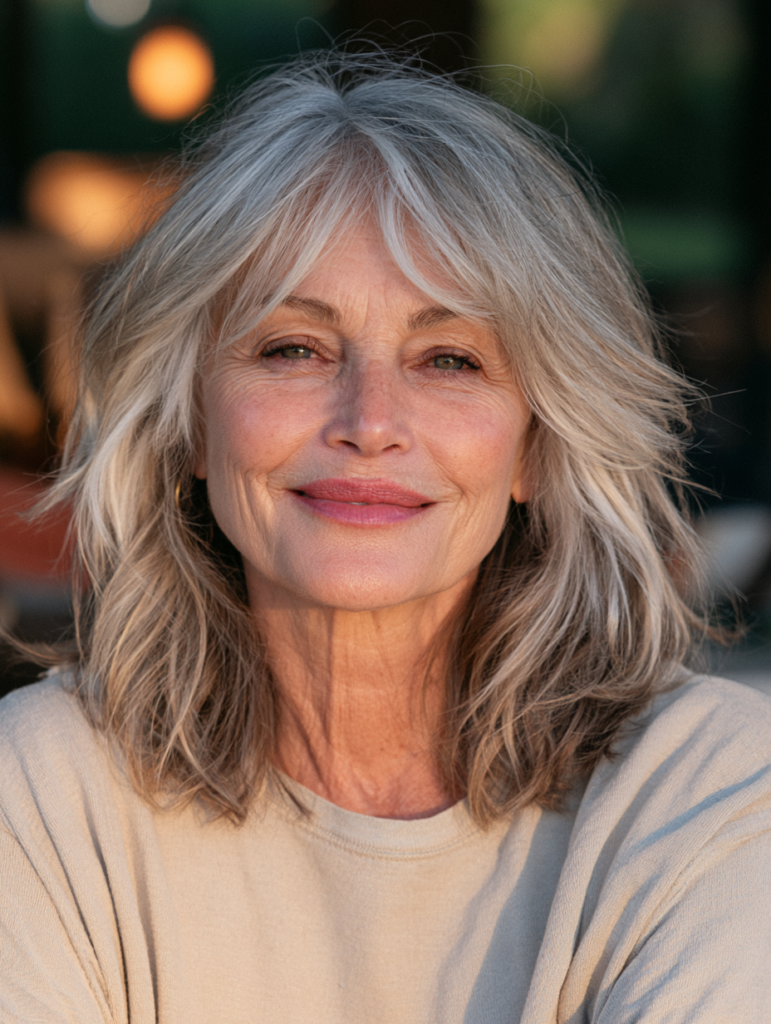
Keep the transition gradual so the fringe appears connected to the surrounding layers. Broad bends can emphasize the sweeping direction, although natural texture works equally well. This versatile combination suits women over 60 who prefer medium-length hair and want bangs that provide noticeable framing without requiring the frequent maintenance associated with significantly shorter fringe.
Piecey Bangs With Bixie
Piecey bangs add playful texture to a bixie while maintaining the soft proportions associated with this pixie-bob hybrid. Selected fringe sections create definition around the forehead without forming a solid line, helping the hairstyle retain movement and a contemporary character.
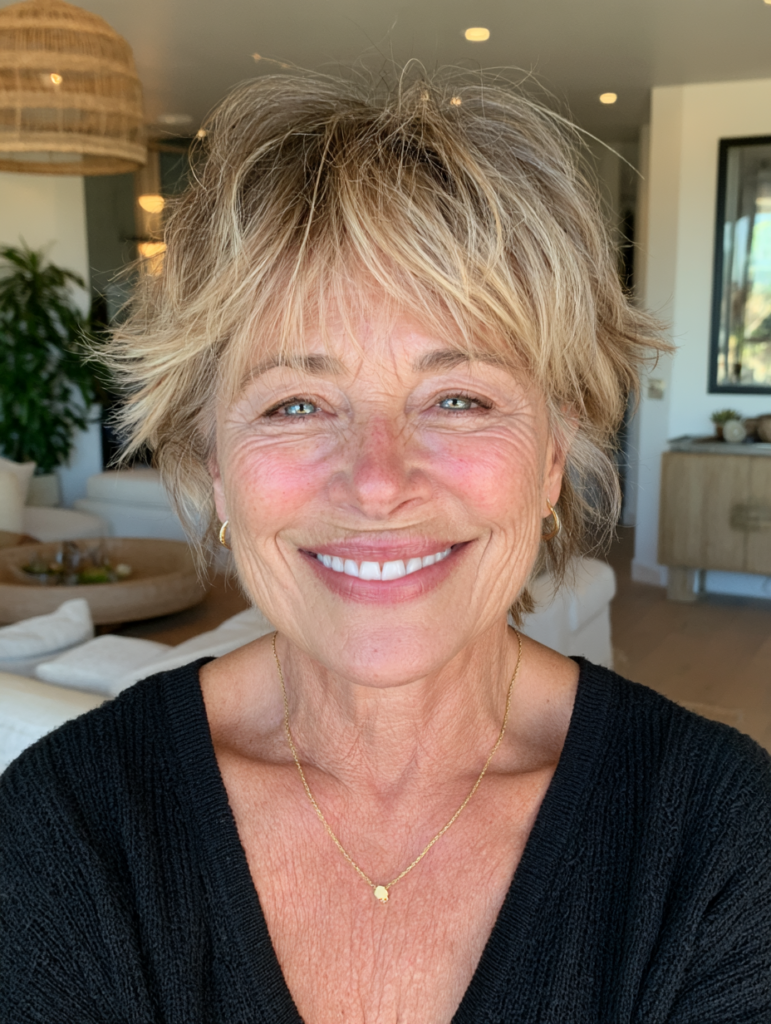
Use a small amount of lightweight styling cream to define only several pieces, leaving the remaining fringe naturally soft. Tucking one side behind the ear can introduce additional asymmetry. This modern option works particularly well for women over 60 who want short-hair practicality but prefer a relaxed, textured finish instead of a traditionally polished fringe.
Wavy Curtain Bangs
Wavy curtain bangs use natural bends to create soft framing on either side of the forehead. Their relaxed movement complements wavy bobs, shags, and medium-length hairstyles, allowing the fringe to become part of the overall texture rather than requiring a completely smooth finish.
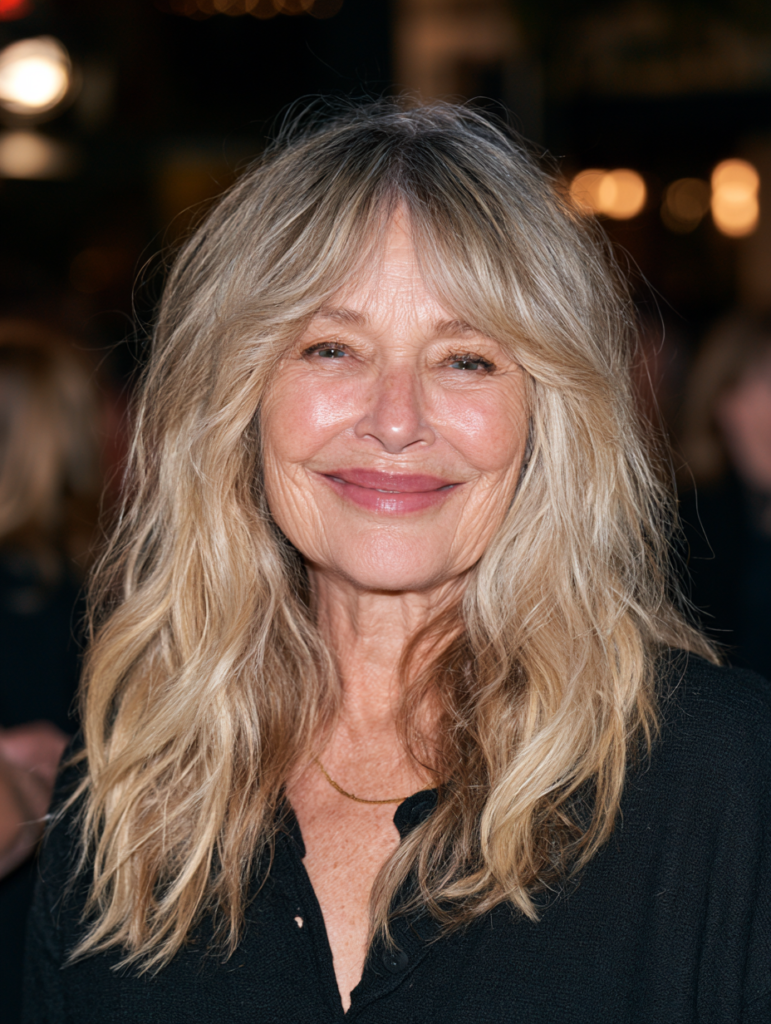
Arrange the center opening while the hair remains damp, then apply lightweight wave cream and allow the bangs to settle naturally. Avoid excessive brushing once the pattern begins forming. This effortless style suits women over 60 who want to work with their natural waves while keeping their everyday routine relatively simple.
Full Side Bangs
Full side bangs create stronger facial framing by using greater density than wispy or feathered alternatives. Sweeping the fringe diagonally prevents it from forming a heavy horizontal line while allowing the fuller section to become a noticeable feature within the overall hairstyle.

Keep the outer edge slightly longer so it blends smoothly toward the temple and surrounding layers. Use lightweight styling products to maintain movement rather than creating a stiff finish. This polished fringe can work beautifully for women over 60 with sufficient density who prefer bangs that make a more defined statement.
Long Face-Framing Fringe
A long face-framing fringe provides the effect of bangs while keeping the shortest pieces around the cheekbones or upper jaw. The extended length creates gentle movement without demanding frequent trims, making it one of the easiest fringe options to maintain and grow.
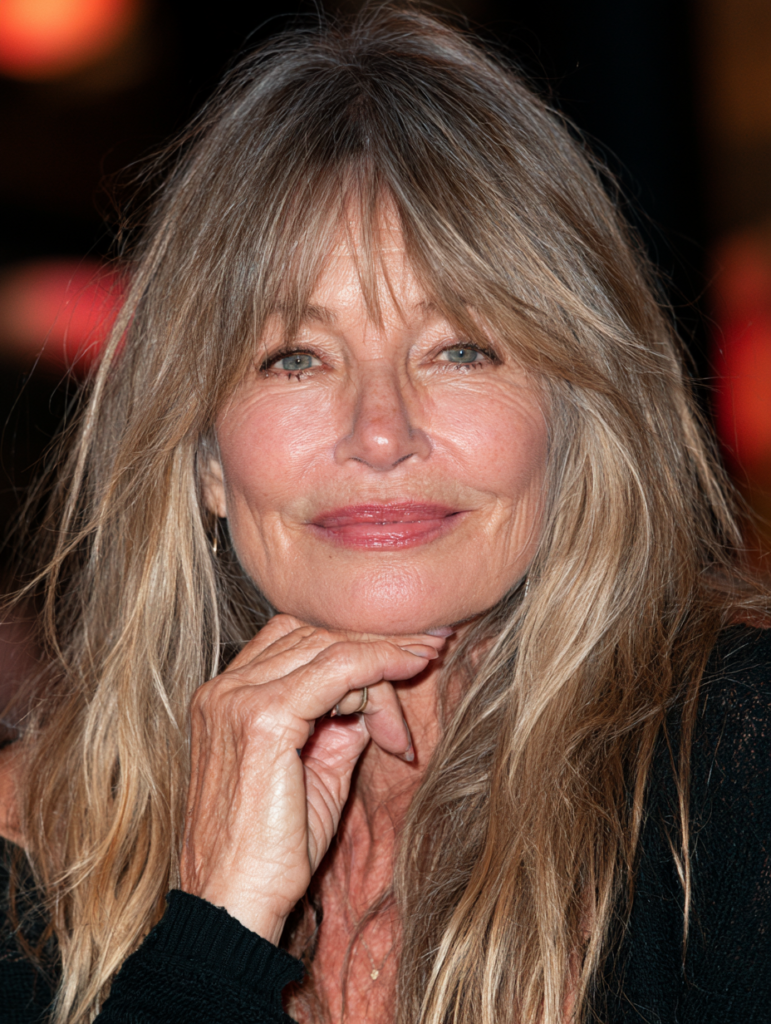
Part the front naturally and allow the pieces to sweep outward or toward one side depending on your preferred style. Soft waves can emphasize the framing, while straight textures create understated movement. This adaptable option suits women over 60 who want a subtle update without committing to traditional forehead-length bangs.
A Simple Styling Guide for Bangs Over 60
The best bangs for women over 60 usually become easier to manage when their direction is established while damp. Arrange your part first, then use fingers or a small brush to guide the fringe into place. Lightweight mousse, root mist, or smoothing lotion can provide support without weighing down delicate sections.
Refresh only the bangs between washes when necessary instead of restyling the entire haircut. Longer fringe can tuck behind the ears, while curtain and side-swept shapes can transition naturally into face-framing pieces. Regular trims help shorter bangs maintain their intended proportions, but softer, longer styles generally offer more flexibility during grow-out.
Final Thoughts
The best bangs for women over 60 can range from delicate wispy pieces to fuller side sweeps and naturally textured curls. Curtain bangs provide adaptable framing, feathered fringe adds softness, and longer styles offer an especially forgiving option when easy maintenance is important.
Consider your natural density and texture before deciding how much hair should become part of the fringe. Fine strands may benefit from lighter sections, while thicker hair provides more freedom for fuller bangs. Whether paired with a pixie, bob, bixie, or layered lob, thoughtfully shaped bangs can refresh your hairstyle while keeping the overall result comfortable, expressive, and versatile.
