Bangs for thinning hair can add flattering movement around the face while keeping precious density where it matters most. The key is avoiding overly deep fringe sections that remove too much hair from the crown. Wispy bangs, longer side fringes, curtain shapes, and softly textured options can create definition without demanding naturally thick strands.
Choosing the right bangs also depends on where thinning is most noticeable, along with your texture and haircut. Strategic parting can help distribute hair more effectively, while longer fringe shapes offer greater styling flexibility. These ideas pair lighter bangs with bobs, pixies, lobs, and layered cuts to maintain an attractive balance between facial framing and overall fullness.
Why Lightweight Fringe Remains a Smart Choice
Lightweight bangs continue to work well for thinning hair because they create intentional softness without requiring a large section of hair. Carefully placed pieces can provide movement across the forehead while leaving greater density through the crown and sides, where visual fullness may be more important.
Their versatility also makes them easier to adapt as density changes. Longer bangs can transition into side fringe or face-framing layers, while wispy sections can be parted differently for variation. This flexibility allows the overall haircut to evolve without constantly introducing new layers or removing unnecessary hair.
Wispy Side-Swept Bangs
Wispy side-swept bangs use a small section of hair to create diagonal movement without removing unnecessary density from the crown. Their lightweight construction keeps the forehead softly framed while allowing slightly longer pieces to merge naturally into surrounding hair.
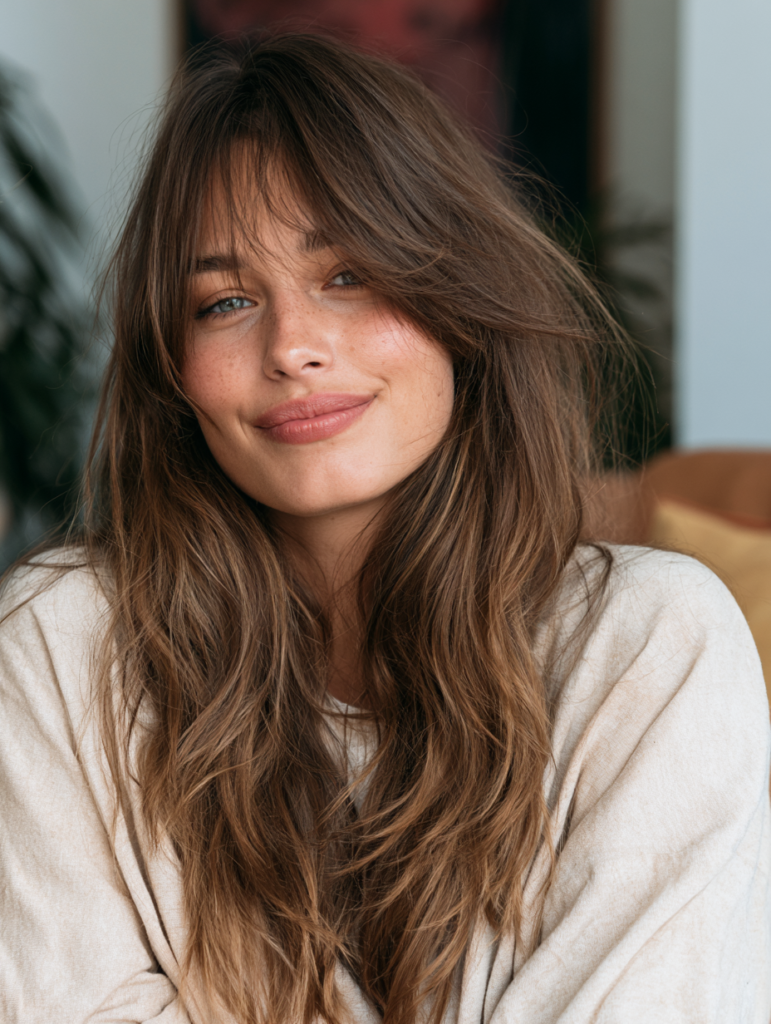
Choose a shallow side part and guide the fringe gently toward one temple rather than creating an extremely deep sweep. Lightweight volumizing mist can provide support without separating delicate strands excessively. This versatile fringe works with short and medium haircuts and can gradually transition into longer side layers when you want an easier grow-out process.
Long Curtain Bangs
Long curtain bangs create an open center with softly extended pieces around the temples and cheekbones. Keeping the fringe longer reduces the amount of hair needed for the shape, making this option particularly useful when maintaining overall density is a priority.
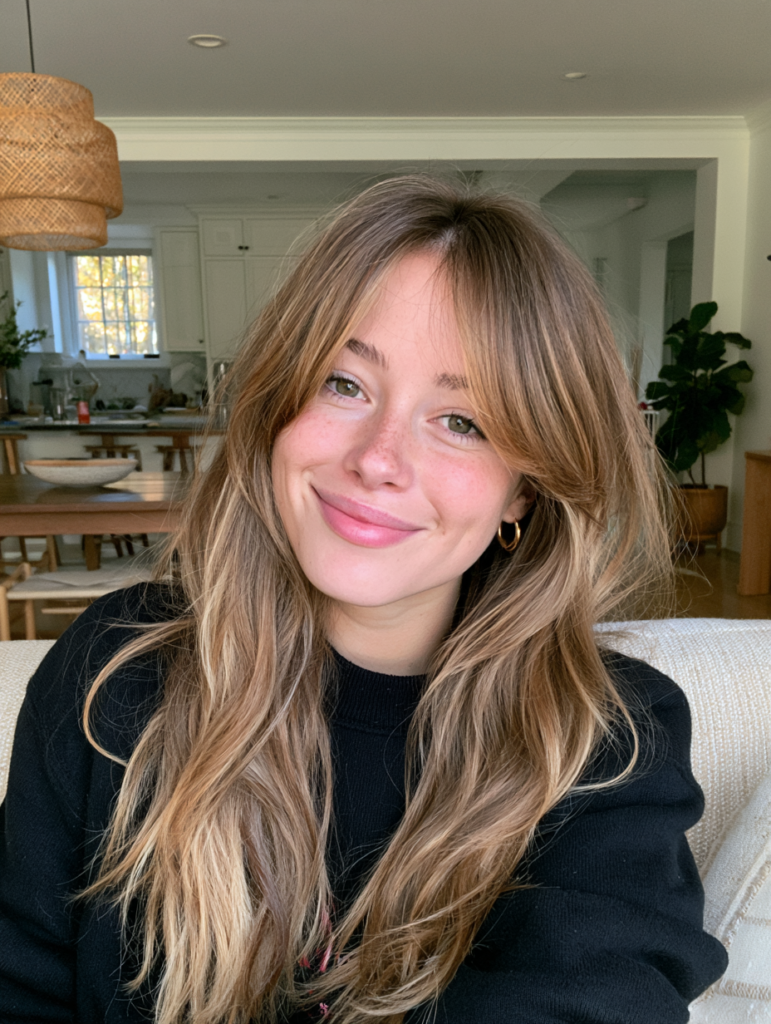
Arrange the opening while the hair remains damp and guide each side outward with minimal product. Avoid cutting the fringe too deeply into the crown, since a narrow section usually creates sufficient movement. These adaptable bangs work beautifully with lobs and layered hair because they can eventually blend into ordinary face-framing sections.
Feathered Side Fringe
A feathered side fringe creates airy movement through softly tapered ends rather than relying on substantial density. The diagonal direction can also help redistribute hair visually, especially when the fringe begins near an existing side part and blends smoothly toward the temple.
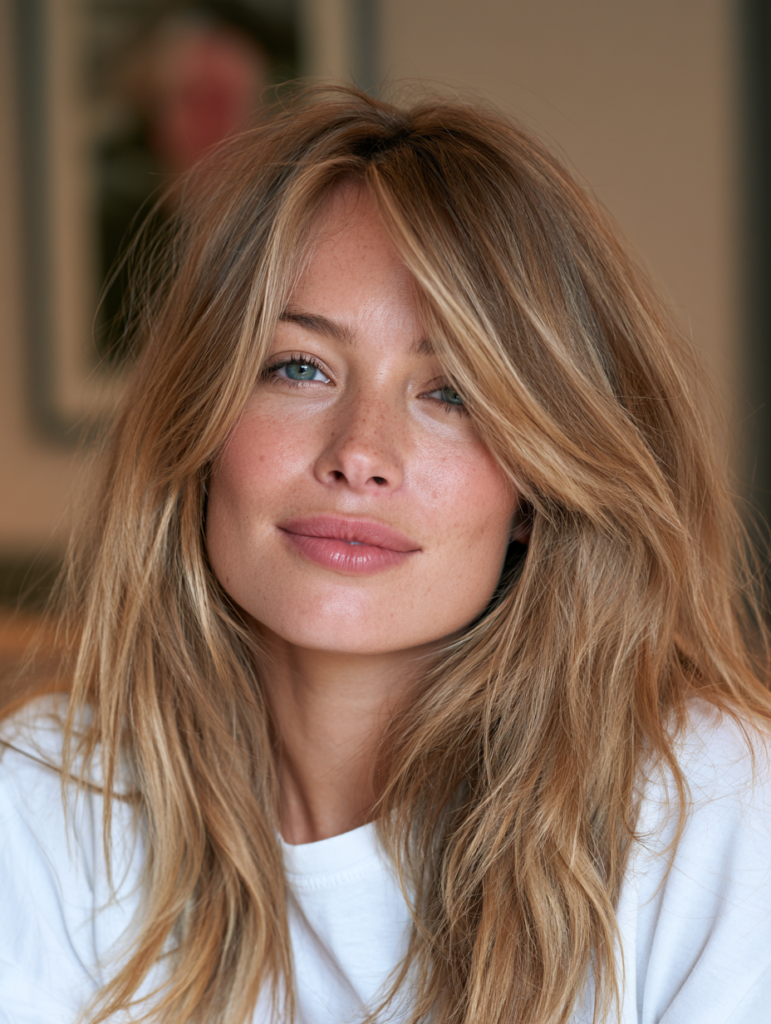
Keep feathering restrained so the ends remain substantial enough to avoid appearing excessively sparse. Use lightweight mousse near the roots and finger-style the fringe into position. This soft option pairs particularly well with layered bobs, pixies, and medium hairstyles when you want visible facial framing without introducing a thick traditional fringe.
Wispy Curtain Fringe
A wispy curtain fringe combines delicate separation with the versatile center-opening shape of classic curtain bangs. Using only a narrow section preserves more density throughout the surrounding hair while still creating noticeable softness around the forehead and upper cheekbones.

Keep the center pieces slightly shorter and allow the outer sections to lengthen gradually toward the temples. A light outward bend can reinforce the curtain effect without requiring extensive styling. This fringe works especially well with fine or thinning hair because slight separation appears intentional rather than making the bangs seem as though they should form a dense line.
Side Bangs With Blunt Bob
Side bangs paired with a blunt bob balance softer facial framing against a strong, substantial perimeter. The bob’s clean baseline can make the ends appear denser, while a restrained fringe section introduces movement without significantly reducing the overall volume of the haircut.

Keep the bangs long enough to sweep comfortably toward one side and blend into the front of the bob. Avoid excessive texturizing around the perimeter, where density provides the greatest visual benefit. This polished combination is especially useful when you want bangs while keeping the main haircut structured and visually full.
Long Side Fringe With Lob
A long side fringe creates graceful movement while retaining enough length to tuck behind the ear whenever greater control is needed. Paired with a lob, the fringe blends naturally into the medium lengths without requiring multiple short layers around the forehead.
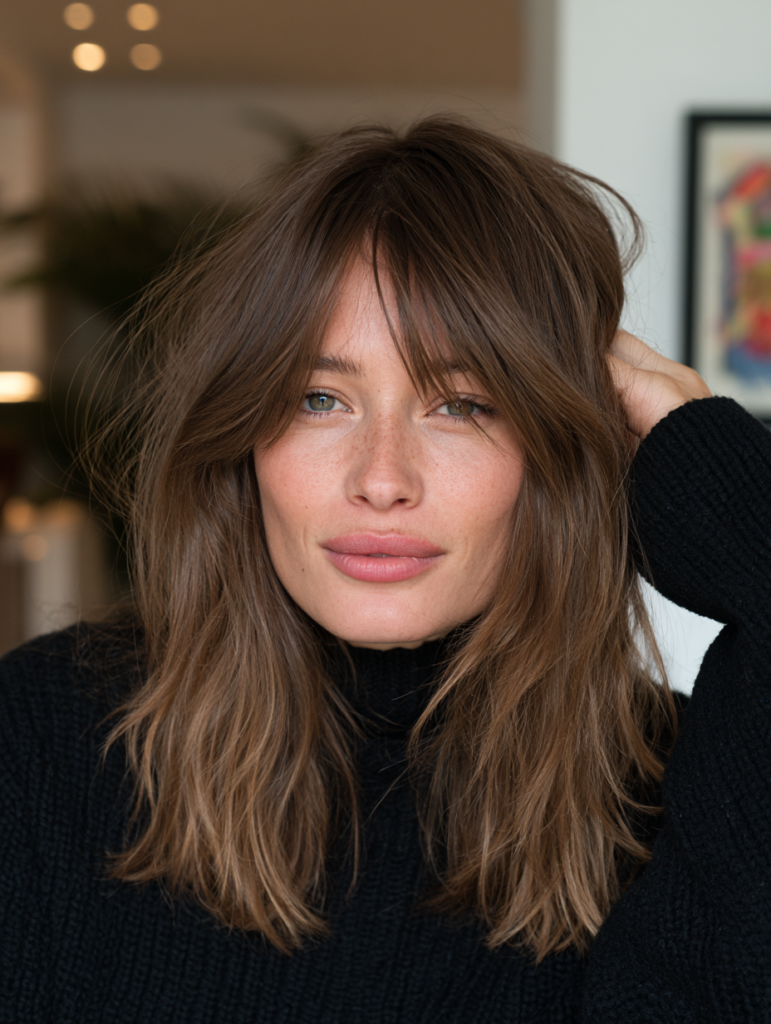
Use a slightly off-center part and direct the front section diagonally rather than forcing dramatic height. Lightweight root spray can provide subtle elevation when desired. This versatile combination offers a practical solution for thinning hair because the longer fringe remains flexible, easy to reposition, and relatively forgiving as it continues growing between salon appointments.
Piecey Bangs With Textured Pixie
Piecey bangs add deliberate separation to a textured pixie, allowing finer sections around the forehead to become part of the haircut’s design. Keeping the fringe light can reduce the need for dense coverage while short crown proportions help prevent excess weight from pulling delicate strands flat.
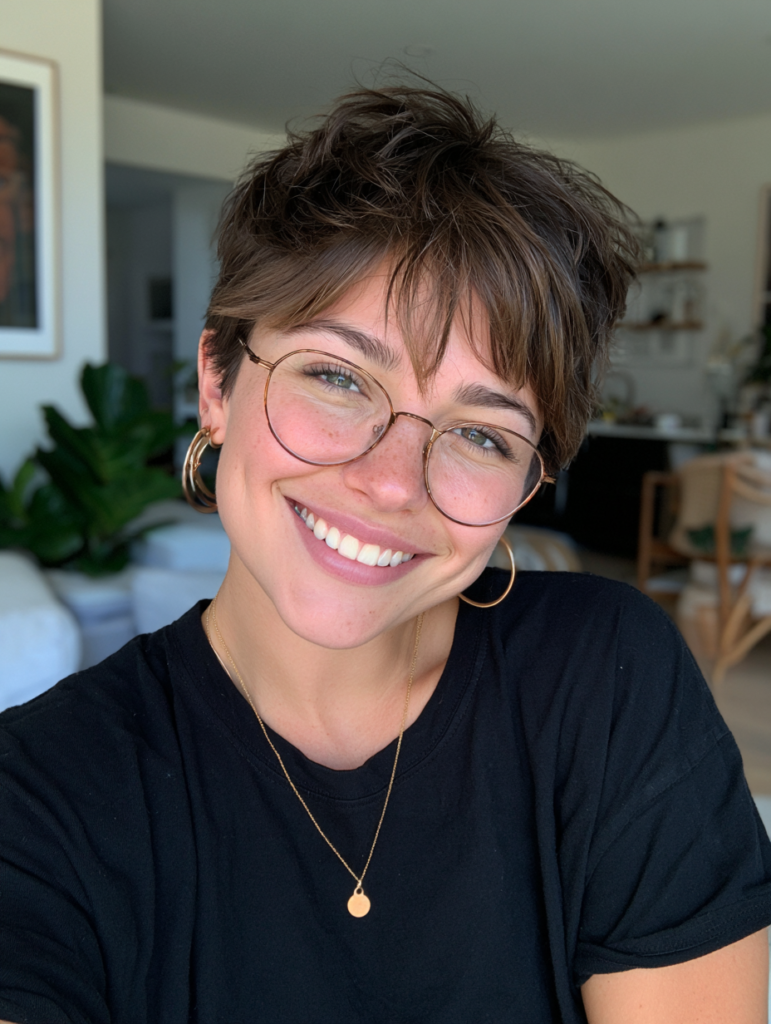
Use a tiny amount of lightweight styling paste to define only selected pieces rather than coating the entire fringe. Maintain gentle lift through the crown for balance. This contemporary option works particularly well when thinning hair benefits from shorter proportions and you prefer texture over a perfectly smooth or solid bang shape.
Soft Bottleneck Bangs
Soft bottleneck bangs begin with a narrower center before gradually widening toward the temples and cheekbones. Their curved outline provides more framing than scattered wisps while still allowing the fringe section to remain relatively restrained and compatible with thinning hair.

Keep the center airy instead of cutting a heavy horizontal line across the forehead. Longer outer sections should connect gradually with surrounding layers for a seamless finish. This modern fringe works particularly well with medium hair because its shape can transition naturally into face-framing layers as the bangs grow longer.
Sweeping Bangs With Bixie
Sweeping bangs add softness to a bixie while taking advantage of the longer front sections already associated with this pixie-bob hybrid. The diagonal shape creates visible movement without requiring an especially thick fringe, helping preserve density throughout the crown.
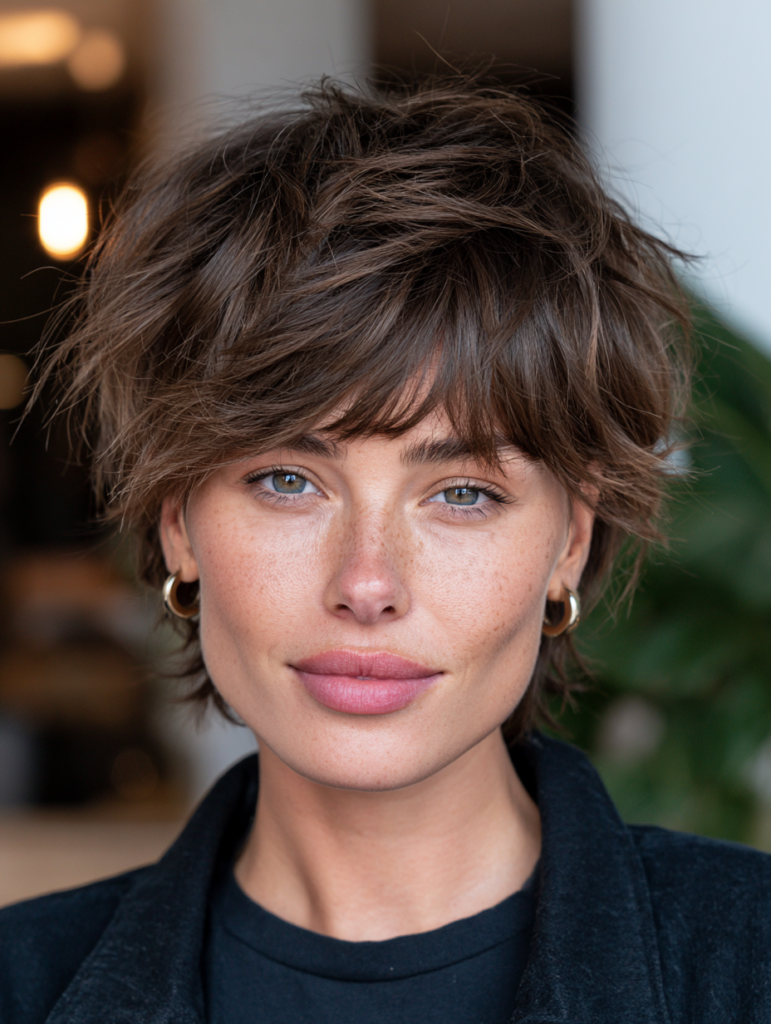
Direct the bangs toward one side using lightweight styling foam and your fingertips. Tuck the opposite side behind the ear to emphasize asymmetry without adding additional layers. This adaptable short hairstyle can be particularly useful for thinning hair because its compact proportions reduce weight while the longer fringe maintains flattering softness around the face.
Airy Bangs With Layered Bob
Airy bangs create a light veil across the forehead while a layered bob provides movement throughout the surrounding haircut. The fringe should remain intentionally sparse and softly separated, allowing its delicacy to appear purposeful rather than attempting to imitate a dense traditional bang.
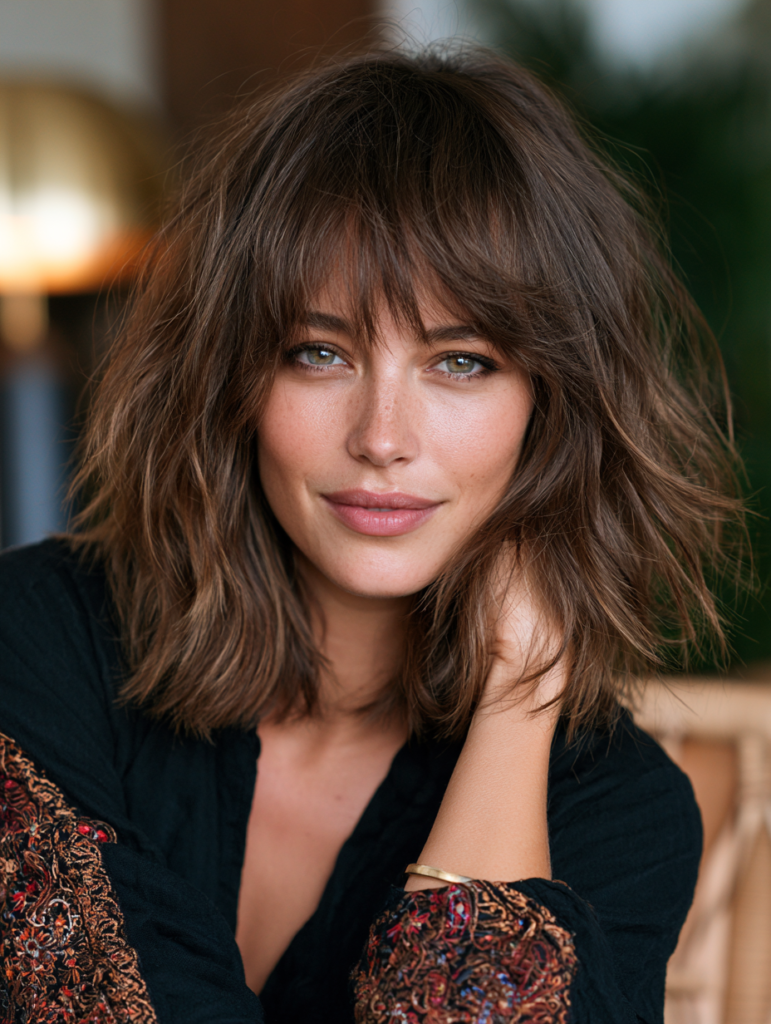
Use minimal product and avoid aggressively thinning the ends during cutting. Subtle crown shaping can provide additional lift while a stronger lower perimeter maintains visual substance. This balanced combination works well when you want noticeable bangs but prefer a softer effect that does not require removing a substantial section from already delicate hair.
Curved Side Bangs
Curved side bangs follow a gentle diagonal line from the forehead toward the cheekbone, creating soft framing without relying on dramatic volume. Their longer proportions make them easier to blend into existing layers and reduce the need for a deep fringe section.
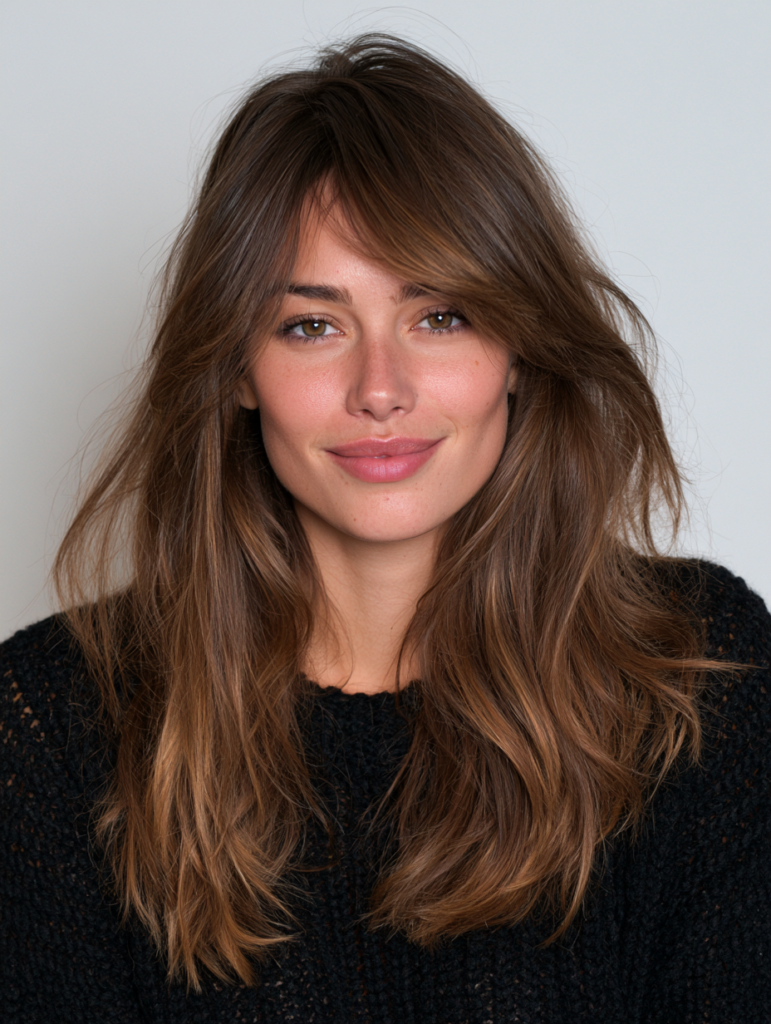
Shape the curve while the hair remains damp and use a small brush or fingertips to guide the ends outward. Avoid heavy oils near the roots, which can quickly flatten delicate strands. This elegant fringe works across bobs, lobs, and shoulder-length hairstyles while providing a flexible alternative to shorter straight-across bangs.
Off-Center Curtain Bangs
Off-center curtain bangs shift the traditional opening slightly toward one side, creating asymmetry that can work naturally with existing growth patterns. The longer sections provide coverage and movement without requiring a large amount of hair to be separated from the crown.
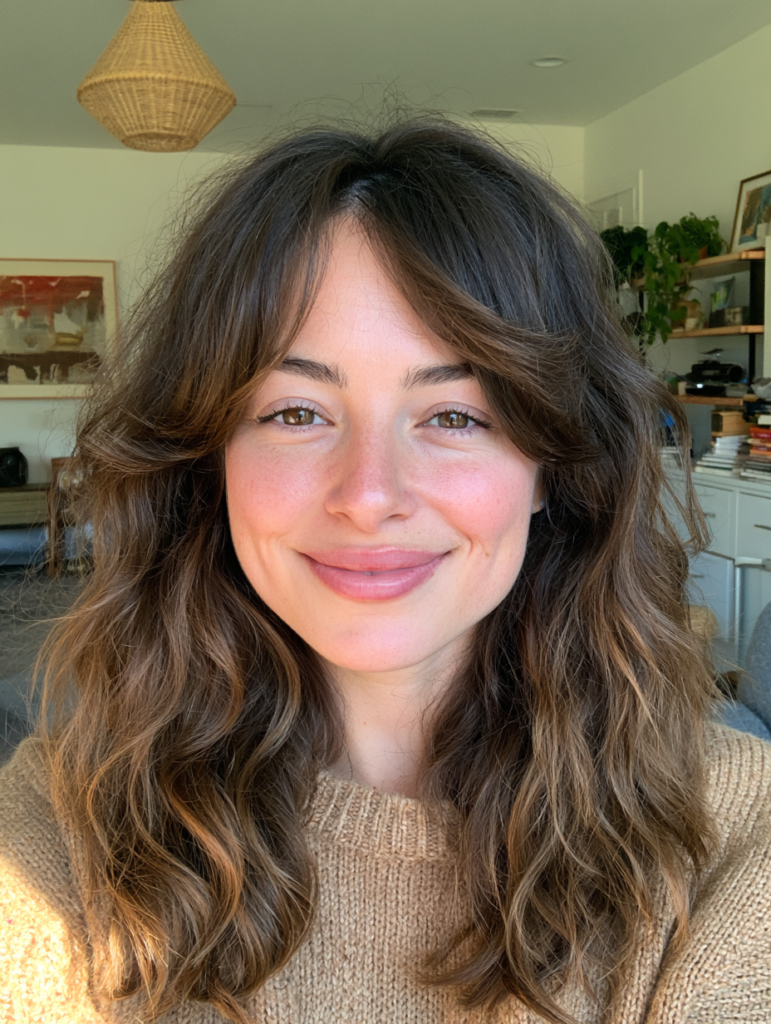
Establish the part while the fringe is damp, then direct each section outward with lightweight styling support. Allow the heavier side to remain fuller while keeping the opposite section softer. This adaptable approach is useful when a perfectly centered fringe does not cooperate naturally, and it can transition smoothly into longer facial framing over time.
Face-Framing Fringe With Shoulder-Length Hair
A face-framing fringe uses longer pieces around the forehead and temples that gradually blend into shoulder-length hair. Because the shortest sections remain relatively long, the style preserves density while still providing visible movement and definition around the face.
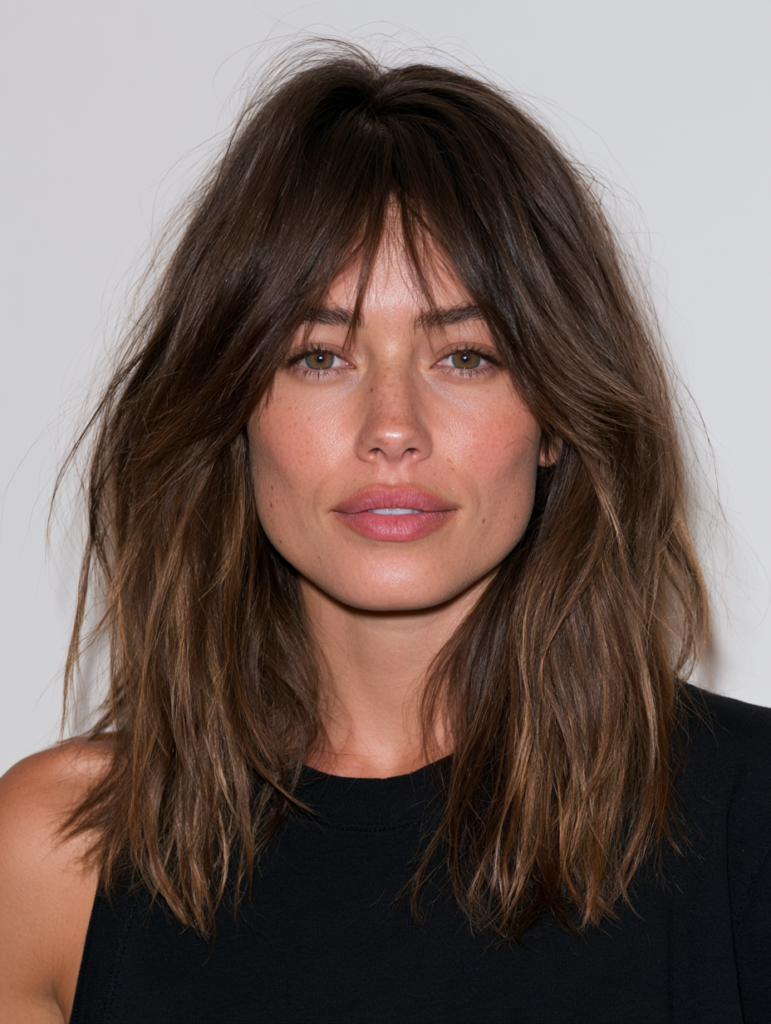
Keep the surrounding layers restrained so the lower lengths maintain a substantial appearance. The fringe can sweep sideways, separate softly through the center, or tuck behind the ears when desired. This versatile option works particularly well for thinning hair when you want the effect of bangs without committing to a short or densely cut traditional fringe.
A Fullness-Friendly Styling Routine for Thinning Hair
Bangs for thinning hair generally look strongest when products remain lightweight and root movement is preserved. Apply a small amount of volumizing mousse or root mist while the fringe is damp, then arrange the part and direction before the strands dry completely. Avoid repeatedly applying oils or rich creams around the forehead.
Changing the part slightly can also help prevent the fringe from repeatedly separating in exactly the same areas. Between washes, dry shampoo can restore grip when appropriate. Most importantly, avoid excessive thinning shears and overly deep fringe sections. Preserving density should remain central to both the haircut and everyday styling routine.
Final Thoughts
Bangs for thinning hair can provide softness and facial framing without requiring naturally dense strands. Wispy fringes create deliberate delicacy, while side-swept and curtain variations offer additional flexibility. Longer bangs are particularly adaptable because they can blend naturally into surrounding layers as they grow.
The best approach is usually to preserve rather than remove density. Start with a restrained fringe section, choose a shape compatible with your natural growth pattern, and keep styling products lightweight. Whether paired with a blunt bob, textured pixie, bixie, or shoulder-length cut, carefully designed bangs can introduce movement while keeping the overall hairstyle balanced and comfortably manageable.
