Gray hair transition styles can make the process of growing out natural silver, white, or salt-and-pepper strands feel considerably more polished. Instead of waiting for two contrasting colors to eventually meet, a thoughtful haircut can blend the changing tones through strategic layers, shorter lengths, texture, or carefully positioned face-framing pieces.
The ideal approach depends on your starting color, percentage of gray, hair length, and willingness to cut existing colored ends. Some women prefer gradually trimming away previous color, while others embrace dimensional lengths during the transition. These hairstyles use movement and purposeful shaping to make changing color patterns look like part of the design rather than an awkward stage.
Why Transitional Gray Styles Have Lasting Appeal
Gray transition hairstyles remain valuable because they allow natural color to emerge gradually without requiring one dramatic haircut. Strategic lengths, layers, and texture can soften the visual difference between new silver growth and previously colored sections while maintaining enough flexibility to adjust the hairstyle throughout the process.
Their appeal extends beyond the transition itself. Once previous color has grown away, the same bob, pixie, lob, or layered cut can showcase natural silver beautifully. This makes a well-designed transition hairstyle useful both during the growing phase and after the transformation is complete.
Silver Blended Pixie
A silver blended pixie shortens previously colored lengths while allowing natural gray growth to become increasingly prominent. Keeping slightly more length through the crown provides movement, while shorter sides and nape sections gradually remove older color during regular maintenance trims.

Soft texture can visually connect silver roots with remaining pigmented pieces, preventing the contrast from appearing excessively rigid. Finger-style the crown with lightweight mousse to highlight dimensional strands. This practical option works especially well when you are comfortable going shorter and want to reduce the overall time required for previous color to grow completely away.
Salt-and-Pepper Layered Bob
A salt-and-pepper layered bob turns contrasting dark and silver strands into an intentional dimensional feature. Soft layering encourages different tones to overlap naturally, which can make the boundary between gray regrowth and previously colored hair appear less visually abrupt.

Keep the perimeter substantial enough to maintain structure while adding controlled movement through the crown and sides. A side part can redistribute the color pattern and expose different silver sections. This adaptable bob is particularly useful when you want to maintain short-to-medium length while allowing naturally mixed gray tones to become progressively more visible.
Gray Blending Collarbone Lob
A collarbone lob offers enough length to preserve styling versatility while gradually removing previously colored ends over multiple trims. Subtle layering creates movement that helps silver regrowth integrate visually with the remaining color, especially when several natural gray tones are emerging simultaneously.

Keep face-framing sections softly blended and avoid excessive layering that could make the ends appear sparse. Waves can further diffuse strong horizontal color boundaries by creating movement throughout the lengths. This transition style works beautifully when you want to embrace gray gradually without immediately committing to a dramatically shorter haircut.
Silver Pixie Bob
A silver pixie bob combines a shorter back with slightly longer front and side sections, making it useful for gradually removing old color while retaining facial softness. The mixed proportions also allow emerging silver strands to create natural dimension throughout the haircut
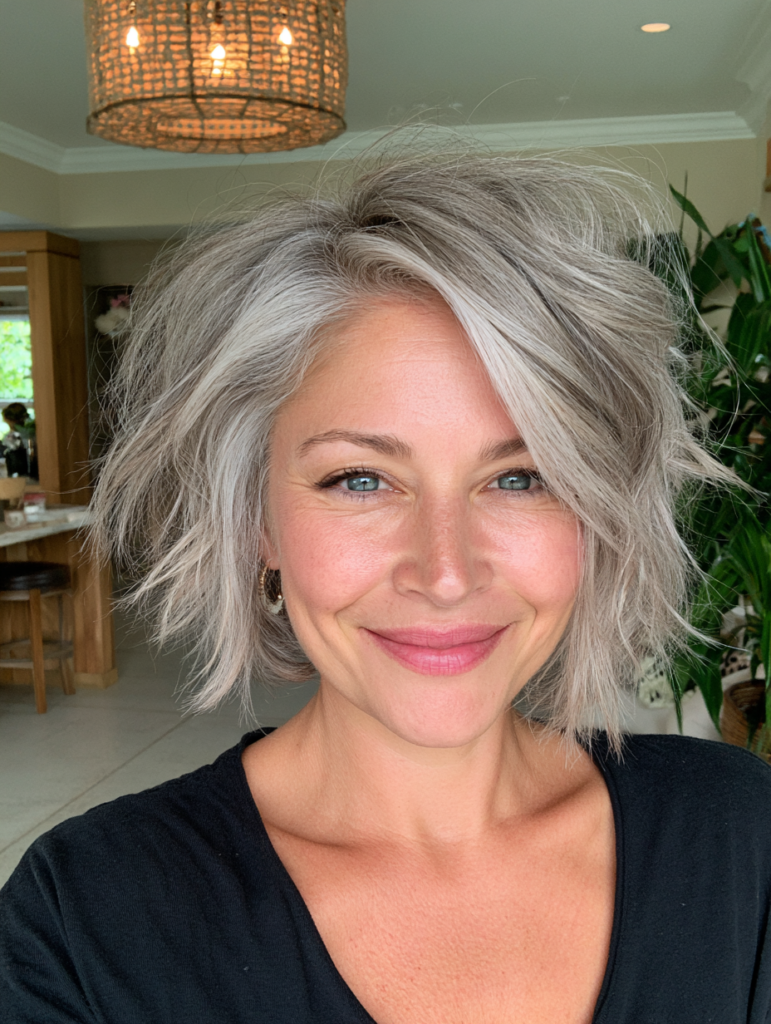
Use an off-center part to reveal different areas of gray growth and create gentle crown movement. Longer front pieces can remain softly textured or tuck behind the ears for variation. This transitional haircut provides a practical middle ground when a traditional pixie feels too short but maintaining a full bob would prolong the grow-out process considerably.
Gray Shag With Soft Layers
A gray shag uses layered movement to break up visible boundaries between natural silver roots and previously colored lengths. Softly overlapping sections allow multiple tones to appear distributed throughout the hairstyle, creating a more dimensional effect as the natural color continues growing.

Keep the layers blended rather than dramatically disconnected so the hairstyle remains easy to maintain throughout different transition stages. Natural waves can enhance the tonal variation without requiring perfect styling. This relaxed haircut is especially useful when your hair already has texture and you prefer embracing the changing color pattern instead of disguising every contrasting section.
Silver Face-Framing Layers
Silver face-framing layers can emphasize natural gray emerging around the hairline while allowing longer colored sections to remain temporarily intact. Because gray often appears prominently near the temples, intentionally showcasing those lighter pieces can make the transition look purposeful rather than unfinished.

Begin the shorter sections around the cheekbones or jaw and blend them gradually into the remaining lengths. Gentle waves can further integrate contrasting tones throughout the front. This approach is particularly appealing when you want to preserve medium or long hair while making naturally silver areas a visible feature during the grow-out process.
Chin-Length Gray Transition Bob
A chin-length bob can accelerate a gray transition by removing a significant portion of previously colored length without requiring an extremely short haircut. The strong perimeter also creates a polished structure that keeps mixed silver and pigmented sections looking deliberate.

Choose minimal layering when preserving density is important, or add subtle internal shaping for additional movement. Regular trims gradually eliminate the remaining old color while maintaining the recognizable bob silhouette. This straightforward option works particularly well when you want a defined haircut that provides consistent structure throughout the different stages of growing out natural gray.
Wavy Salt-and-Pepper Lob
A wavy salt-and-pepper lob uses broad movement to blend contrasting shades visually throughout medium-length hair. Waves interrupt obvious horizontal boundaries between natural gray growth and previous color, allowing silver, darker strands, and transitional tones to appear more naturally distributed.

Keep the wave pattern loose rather than creating perfectly uniform curls. A lightweight texture product can enhance existing bends while maintaining softness and flexibility. This hairstyle is particularly useful during longer gray transitions because it allows you to preserve substantial length while using natural or styled movement to make changing color patterns appear intentionally dimensional.
Layered Silver Crop
A layered silver crop keeps the overall length compact, allowing old color to disappear relatively quickly through routine trims. Gentle crown layers provide movement and dimension while naturally gray strands become the dominant feature across the haircut.

Keep the sides neat and preserve slightly greater length through the upper sections for styling flexibility. Lightweight mousse can highlight individual silver and white pieces without creating stiffness. This confident transition style works especially well when you are ready for a shorter haircut and prefer reducing the amount of time spent maintaining noticeably different colors through longer growing stages.
Gray Bob With Side-Swept Bangs
A gray bob with side-swept bangs directs attention toward dimensional movement around the face while natural silver continues growing throughout the haircut. The diagonal fringe can incorporate lighter strands from the hairline, helping the emerging gray become an intentional focal point.

Keep the bangs long enough to blend naturally toward the temples and surrounding bob sections. A side part can also redistribute contrasting colors, making regrowth boundaries less uniform. This polished transition style is particularly useful when you want to maintain familiar bob proportions while introducing softness and movement during the process.
Long Gray Blended Layers
Long gray blended layers allow you to preserve significant length while natural silver gradually replaces previous color. Gentle layering creates overlap between different shades, helping break up the visual boundary that can develop when gray roots grow against darker or warmer colored lengths.

Keep the layers long enough to maintain density through the lower sections. Broad waves can create additional tonal movement, while straighter styling produces a more defined transition. This approach requires patience but works beautifully when keeping long hair matters more than completing the gray transition as quickly as possible.
Silver Bixie With Darker Ends
A silver bixie with darker ends can turn an unfinished color transition into a deliberately dimensional short hairstyle. Emerging silver dominates the crown and upper sections, while small amounts of previous color remain visible through longer pieces around the sides or fringe.

Soft texture helps connect the contrasting tones instead of creating a harsh division. Use lightweight styling foam and separate selected crown pieces with your fingers. As regular trims gradually remove the darker ends, the haircut naturally evolves into a fully silver bixie without requiring one dramatic removal of all remaining colored hair.
Curly Gray Transition Bob
A curly gray transition bob uses natural curl patterns to distribute silver and previously colored strands throughout a dimensional silhouette. Because curls overlap and change direction, they can make strong regrowth boundaries appear less obvious than they might on completely straight hair.

Maintain enough length for curls to form naturally after shrinkage and use strategic layers to balance volume. Lightweight curl cream can define the pattern while allowing contrasting tones to remain visible. This transition style is especially effective when you want to embrace both natural texture and natural color throughout the growing process.
A Practical Styling Plan During the Gray Transition
Gray hair transition styles usually look more cohesive when the haircut creates movement through areas where natural and previously colored strands meet. Waves, curls, soft layers, and strategic part changes can help distribute contrasting tones visually. Regular trims gradually remove older color while preserving the shape you have chosen.
Pay attention to the condition of the lengths as well. Previously processed sections may behave differently from newer natural growth, so lightweight conditioning and gentle handling can help maintain a more consistent appearance. Purple-toned products may help with unwanted yellow tones in some gray hair, but they should be used according to your hair’s actual color needs rather than automatically.
Final Thoughts
Gray hair transition styles can turn the grow-out process into an opportunity to experiment with shape, texture, and natural dimension. Short pixies and crops can accelerate the transition, while bobs and bixies provide a balanced middle ground. Lobs and longer layers preserve more length for anyone comfortable with a slower transformation.
The most suitable strategy depends on how quickly you want previous color removed and how much length you want to keep. Instead of treating every contrasting strand as something to conceal, thoughtful cutting can incorporate those changing tones into the hairstyle. With patience and strategic shaping, the journey toward natural silver can look intentional at every stage.
