Short pixie haircuts for thin fine hair over 60 can make delicate strands appear fuller by reducing the weight that often pulls hair flat. Carefully placed crown layers, softly shaped fringes, and tidy tapered sections create dimension without removing unnecessary density. The result can feel light, polished, and considerably easier to manage.
The most flattering pixie depends on your natural texture, density, growth pattern, and preferred styling routine. Some women benefit from a longer top that creates lift, while others prefer a compact crop with a stronger outline. These variations demonstrate how short hair can maintain softness and personality while supporting the appearance of fuller, healthier-looking fine hair.
Why Fine-Hair Pixies Remain an Enduring Choice
Pixie haircuts continue to suit thin fine hair because shorter lengths can reduce downward weight and encourage natural root elevation. Strategic layering provides movement through selected areas, while keeping sufficient density around the perimeter prevents the haircut from appearing excessively sparse or feathered.
Their flexibility also contributes to their lasting popularity among women over 60. Bangs can grow into side-swept sections, longer crowns can become bixies, and tapered areas can soften between trims. Small adjustments allow the pixie to evolve while maintaining its practical, recognizable shape.
Soft Layered Pixie With Side Bangs
Soft crown layers create gentle movement while side bangs add diagonal framing around the forehead and temples. Keeping the layering controlled allows thin fine hair to maintain valuable density rather than becoming overly wispy through the upper sections.
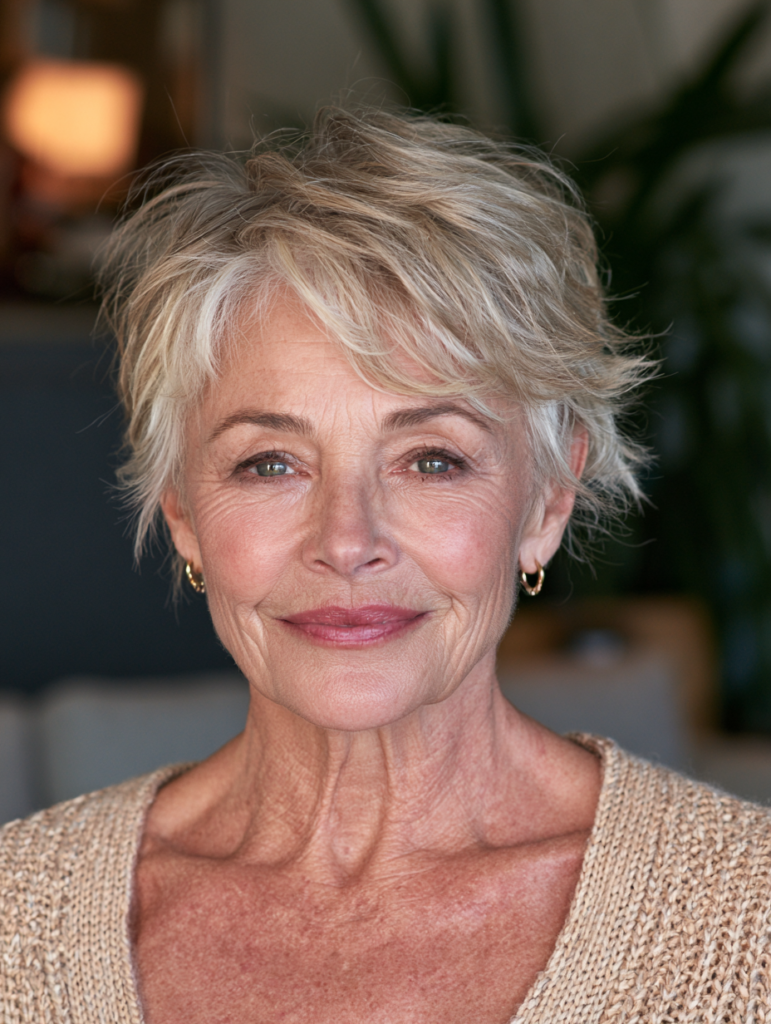
Apply lightweight volumizing mousse near the roots, then direct the fringe sideways while blow-drying. Use your fingertips to separate only a few crown pieces for additional texture. This approachable pixie works beautifully for women over 60 who want manageable short hair with enough softness and movement to avoid an excessively structured or closely cropped appearance.
Tapered Pixie With Longer Crown
A tapered pixie keeps the nape and lower sides compact while preserving additional length through the crown. This contrast directs attention upward and gives thin fine hair enough material to create noticeable lift without relying on extensive teasing.

Keep the longer sections substantial instead of aggressively texturizing them, since excessive separation can reveal sparse areas. Apply root spray before drying the crown against its natural growth direction. This clean, adaptable pixie gives women over 60 an easy neckline while maintaining enough upper length for smooth, lifted, or gently tousled styling.
Feathered Pixie With Wispy Fringe
A feathered pixie introduces light movement through the crown while a wispy fringe provides delicate framing across the forehead. Controlled feathering can prevent fine hair from falling completely flat without sacrificing too much density through the sides and perimeter.
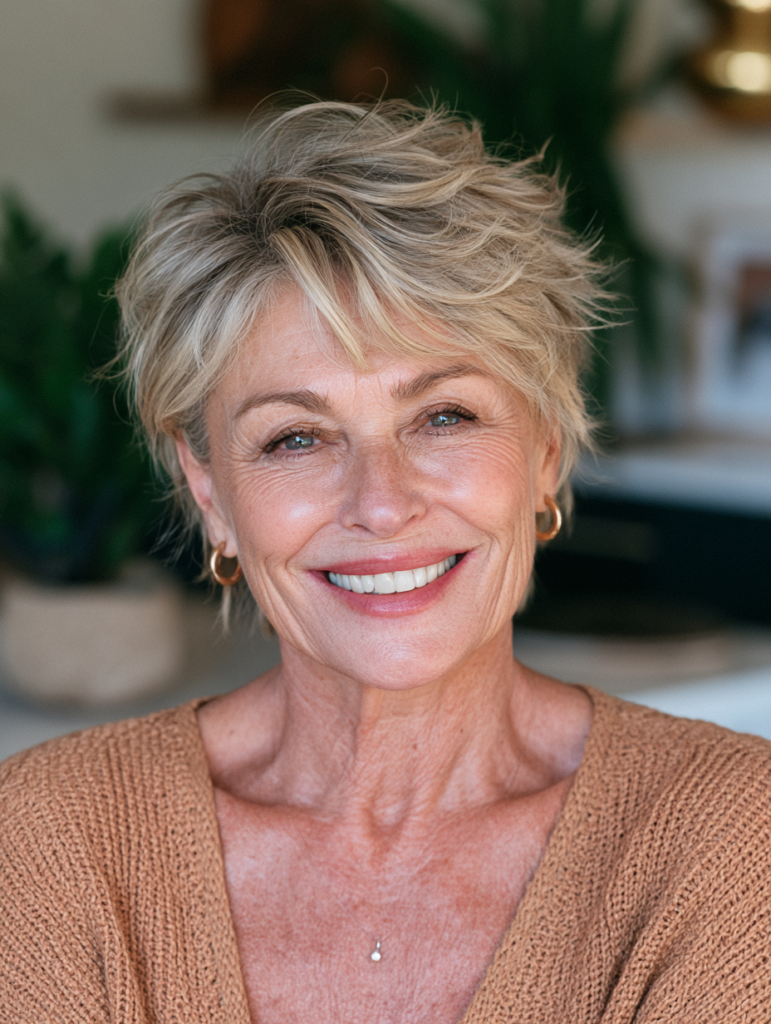
Direct the upper sections slightly away from the face during drying to emphasize their airy shape. Use flexible styling foam rather than heavy wax, which can separate delicate strands excessively. This soft pixie suits women over 60 who appreciate classic feathered movement but want the overall haircut to remain modern, light, and comfortably manageable.
Short Silver Pixie With Crown Lift
A short silver pixie allows natural gray and white tones to create additional visual dimension throughout fine hair. Slightly longer crown sections provide enough length for gentle elevation, while shorter sides maintain a tidy silhouette that requires relatively little daily attention.
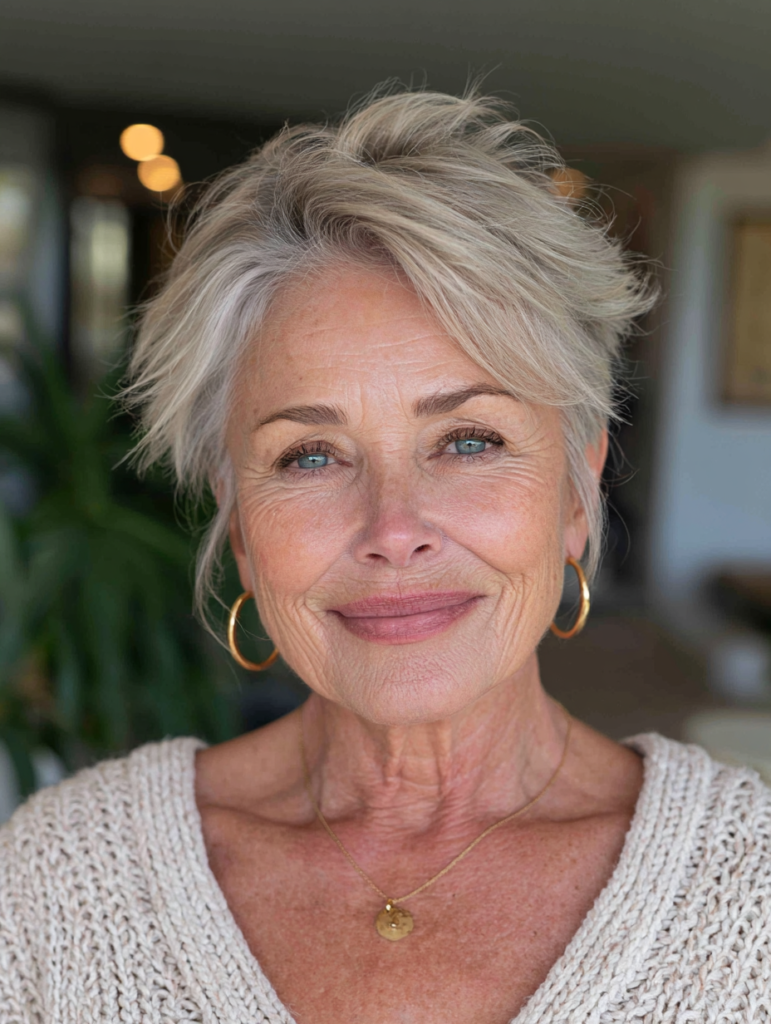
Apply lightweight volumizing foam at the roots and lift the upper sections while drying. Avoid coating silver strands with heavy oils because they can quickly reduce volume. This sophisticated pixie works particularly well for women over 60 who want to embrace natural color while giving thin fine hair a fresh, structured shape with visible movement.
Side-Parted Textured Pixie
A side part naturally shifts more hair toward one section, helping a short textured pixie appear fuller without requiring numerous layers. Gentle surface texture adds movement while keeping the lower sections substantial enough to maintain a balanced overall silhouette.
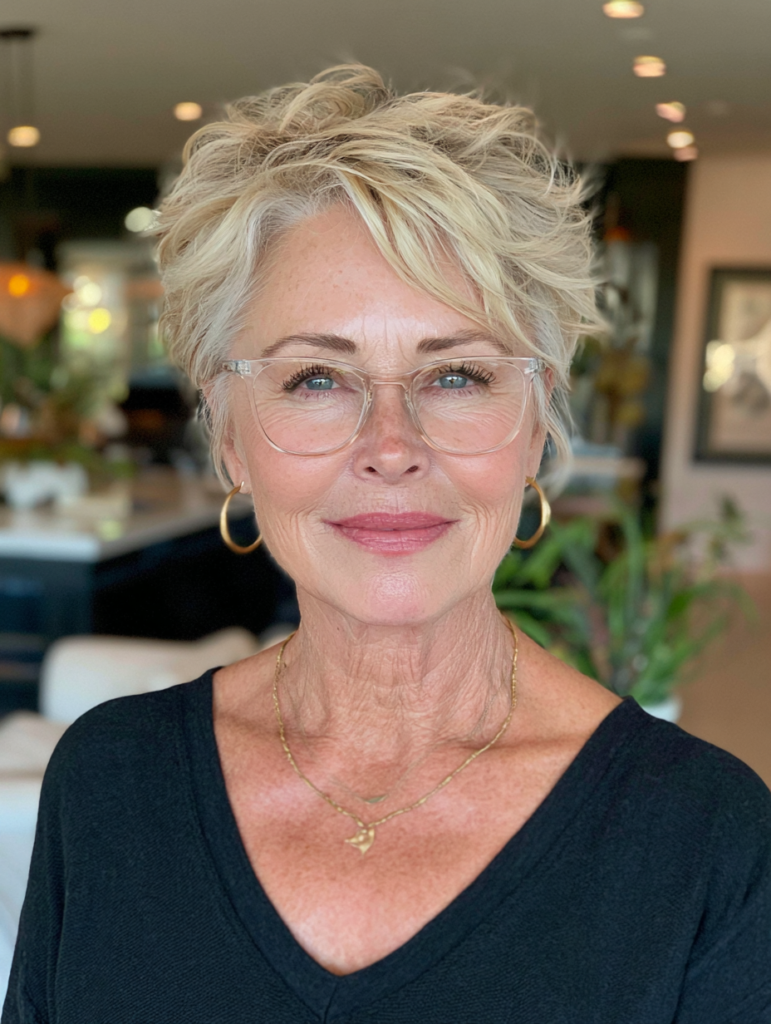
Blow-dry against the natural part first, then reposition the hair to create additional root lift. Define several upper pieces with lightweight styling cream, leaving the remainder soft and flexible. This easy technique makes the haircut particularly useful for women over 60 who want noticeable volume but prefer a straightforward styling routine.
Rounded Pixie With Soft Bangs
A rounded pixie creates gentle fullness through the crown and upper sides while soft bangs provide subtle framing around the forehead. The curved silhouette gives thin fine hair a substantial appearance without depending on heavily layered or dramatically textured sections.

Keep the perimeter neat and the crown layers smoothly blended to preserve density. A small round brush can encourage lift and softly direct the bangs into place. This elegant short haircut works beautifully for women over 60 who appreciate classic styling and want a pixie that feels polished while retaining enough softness for everyday wear.
Short Choppy Pixie With Full Crown
A short choppy pixie uses selected textured pieces to create movement while preserving greater density through the crown. Concentrating stronger texture near the surface prevents thin fine hair from becoming excessively separated throughout the entire haircut.
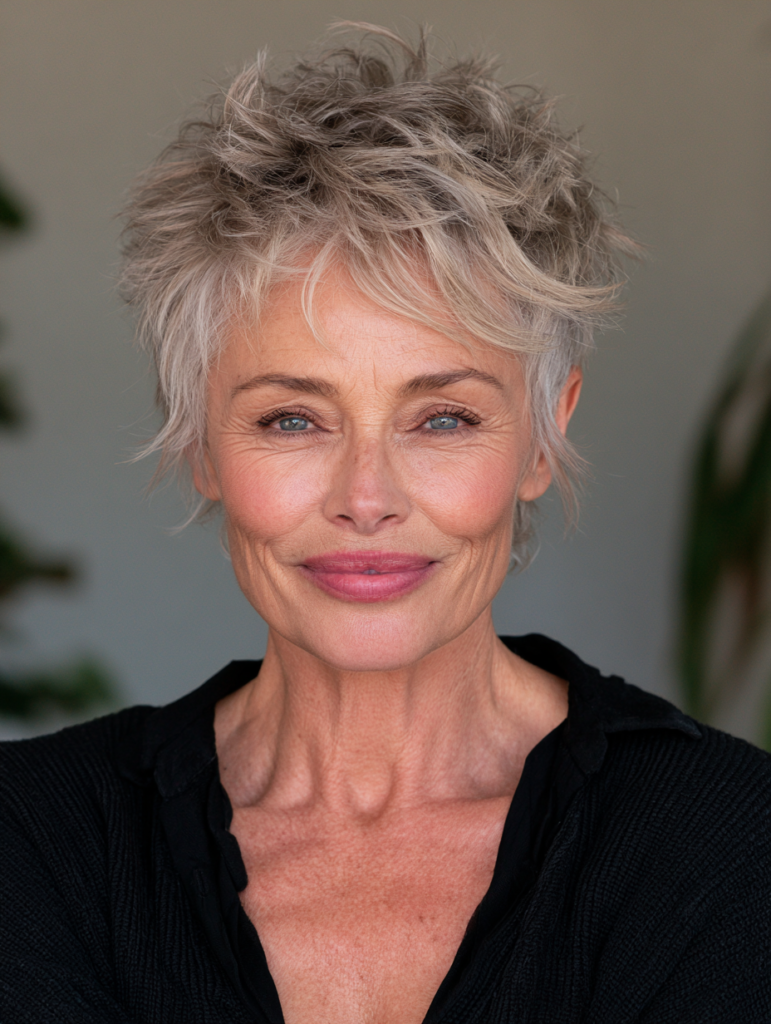
Work lightweight styling paste between your fingertips before defining only a few upper sections. Keep the sides smoother so the crown remains the primary focus. This modern pixie offers women over 60 a slightly more expressive option while maintaining practical short proportions and enough underlying fullness to prevent the hairstyle from appearing overly wispy.
Pixie With Sweeping Front Layers
Sweeping front layers provide graceful movement across the forehead while the shorter back keeps this pixie lightweight and manageable. Maintaining extra length near the front can make thin fine hair appear more substantial while creating several possibilities for changing the direction of the style.

Lift the roots first, then guide the longer sections diagonally across or away from the face. Lightweight mousse provides flexible support without creating stiff separation. This versatile pixie is particularly appealing for women over 60 who enjoy short hair but want enough front length for softer, more adaptable styling.
Short Spiky Pixie With Soft Texture
A short spiky pixie creates upward movement through selected crown pieces, helping fine hair gain visible height and dimension. Keeping the texture soft rather than sharply separated prevents delicate strands from appearing sparse or excessively edgy.
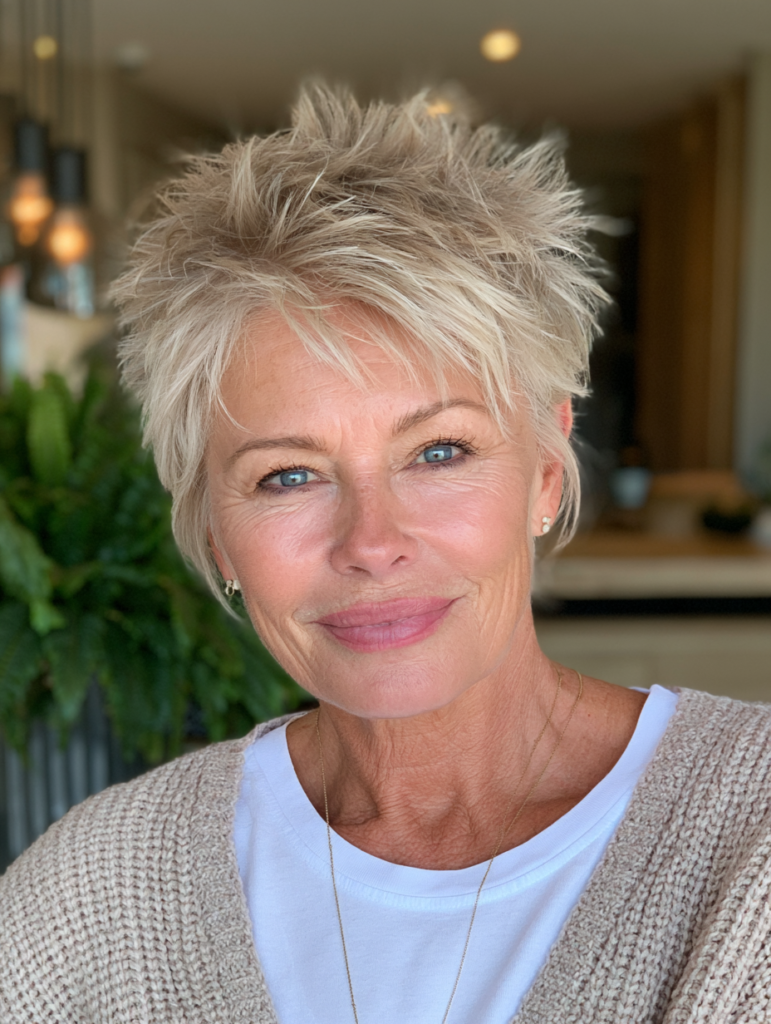
Apply a small amount of lightweight styling paste near the ends and lift individual sections with your fingertips. Leave some pieces flatter around the sides to maintain balance. This playful pixie gives women over 60 an energetic alternative to smoother short styles while remaining easy to reshape whenever a more subdued finish is preferred.
Short Bixie-Inspired Pixie
A bixie-inspired pixie maintains compact proportions while leaving slightly greater length around the sides and front. These softer sections provide valuable visual density for thin fine hair and prevent the haircut from feeling too closely cropped around the face.
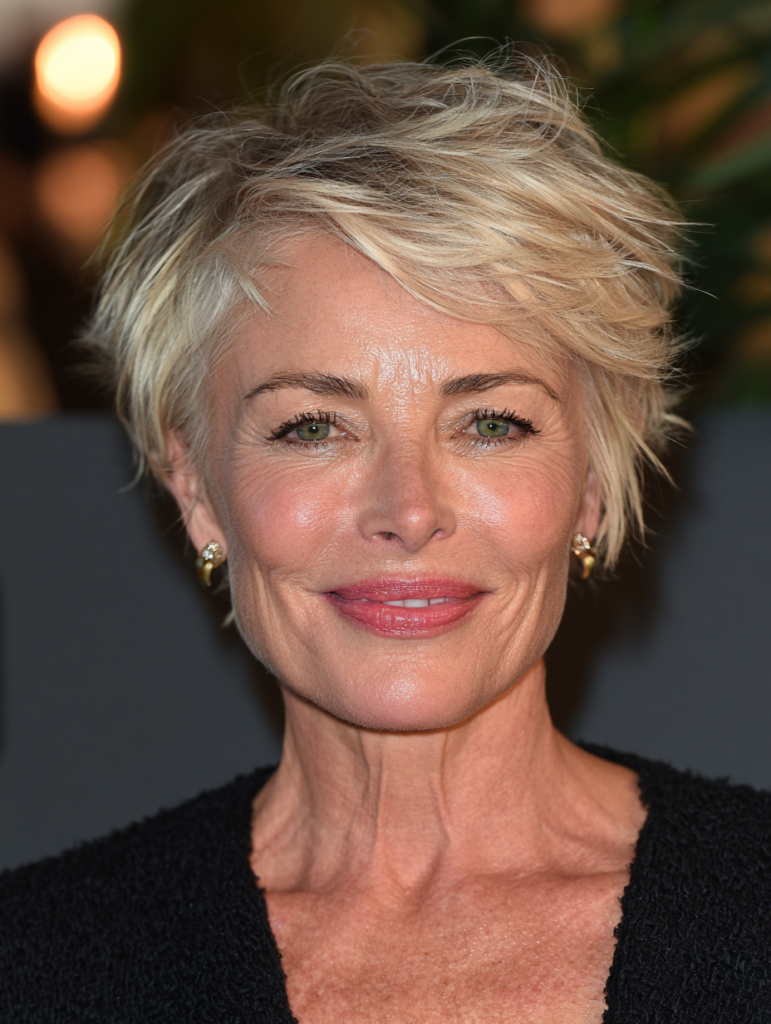
Use restrained layering through the crown to encourage movement without weakening the perimeter. An off-center part can create immediate lift, while one side may tuck behind the ear for variation. This hybrid style works beautifully for women over 60 who want pixie convenience with a touch of bob-like softness and flexibility.
Tousled Pixie With Longer Top
A tousled pixie preserves extra length through the top, giving thin fine hair enough flexibility to create relaxed volume. Shorter sides establish a clean foundation while the upper sections provide movement that can be adjusted according to your preferred level of texture.

Apply lightweight mousse before blow-drying the crown in different directions to encourage natural lift. Once dry, use your fingers rather than a brush to arrange selected pieces. This casual pixie suits women over 60 who want an easy hairstyle that does not depend on perfect placement to look intentionally shaped.
Classic Short Pixie With Side Fringe
A classic short pixie maintains neat proportions around the sides and back while a longer side fringe introduces softness near the forehead. The uncomplicated construction preserves valuable density, making it particularly suitable when fine hair does not respond well to extensive layering.

Use root-lifting spray sparingly before directing the fringe diagonally with a small brush. Keep finishing products lightweight so the strands remain airy and flexible. This timeless haircut offers women over 60 straightforward maintenance, clean structure, and enough front movement to create a flattering alternative to an extremely uniform crop.
Asymmetrical Pixie With Long Bangs
An asymmetrical pixie keeps one side shorter while longer bangs sweep toward the opposite side, creating directional movement and visual interest. The contrasting lengths can make fine hair appear more dynamic without requiring excessive layers throughout the entire haircut.
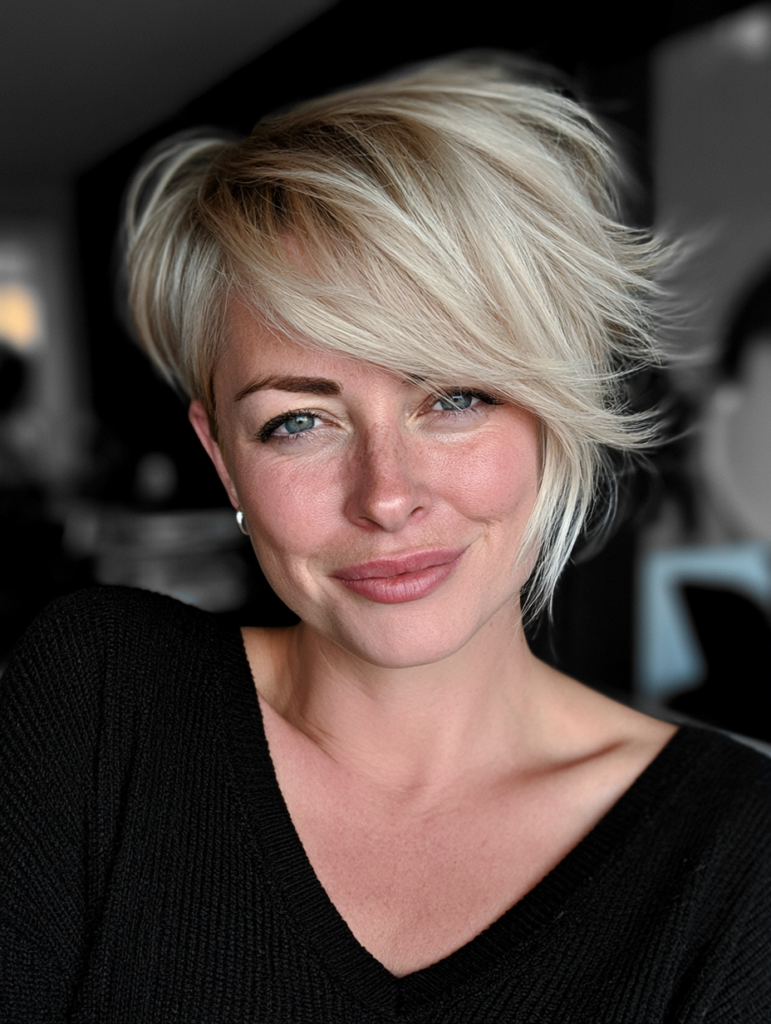
Preserve density through the longer section so it maintains a substantial appearance. Apply volumizing foam at the roots, then direct the bangs sideways with your fingers or a small brush. This contemporary pixie gives women over 60 a more distinctive option while retaining the convenience and lightness associated with short hair.
Textured Crop With Piecey Fringe
A textured crop uses subtle surface layers to introduce movement while a piecey fringe creates soft definition around the forehead. Keeping the texture concentrated in selected areas allows thin fine hair to retain enough density through the overall silhouette.
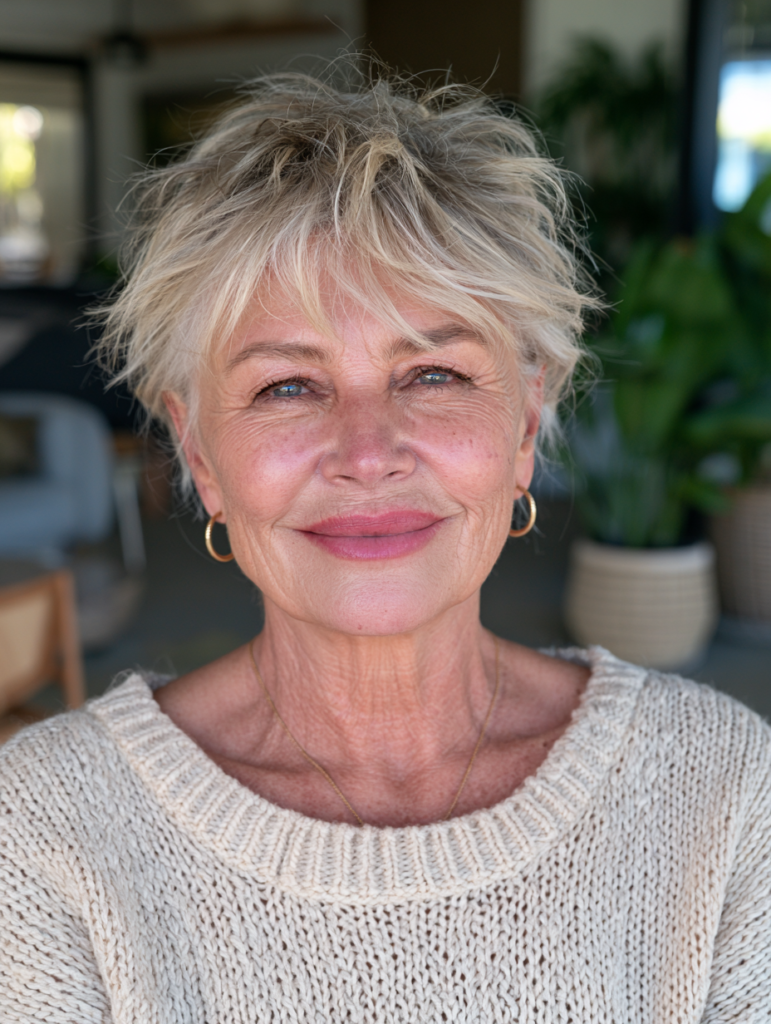
Use a small amount of flexible styling cream to separate several fringe and crown pieces after drying. Avoid coating every strand, which can reduce natural lift and expose sparse sections. This relaxed short haircut suits women over 60 who prefer uncomplicated styling but want enough texture to give a simple crop additional personality.
A Volume-Friendly Styling Plan for Fine Pixies
Styling short pixie haircuts for thin fine hair over 60 works best with lightweight products and deliberate root direction. Apply volumizing mousse or root spray sparingly, then blow-dry the crown against its natural growth pattern before arranging the final shape. This creates lift without aggressive teasing.
Use fingers for texture and a small brush when greater polish is desired. Dry shampoo can provide useful grip between washes, particularly around the crown. Avoid applying heavy waxes, oils, or rich creams throughout the haircut because delicate strands can quickly collapse under excess product, reducing the fullness created by the shorter shape.
Final Thoughts
Short pixie haircuts for thin fine hair over 60 can create impressive movement without demanding complicated everyday styling. Longer crown sections encourage lift, sweeping bangs introduce softness, and carefully tapered sides provide clean structure while preserving valuable density where it matters most.
The ideal pixie should complement your natural growth pattern and preferred amount of volume. Some women may enjoy a polished rounded cut, while others prefer feathered, tousled, or asymmetrical texture. Choosing restrained layering and lightweight styling can help delicate strands maintain a fuller appearance. Which pixie shape best matches the way you prefer to wear your hair?
